Why do Earth's seasons depend on its tilt?
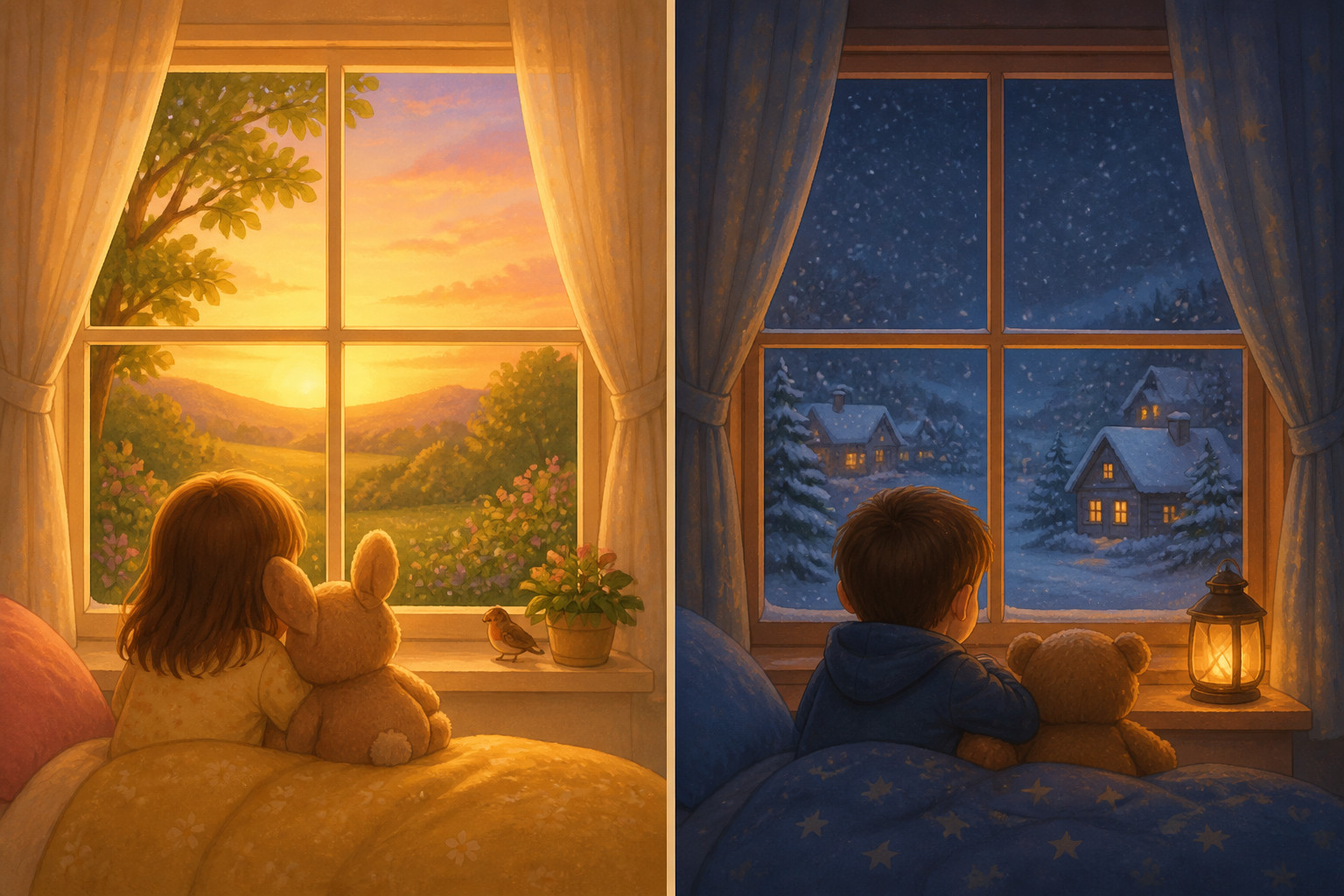
On a summer evening, you might still see sunshine when you put on your pajamas. In winter, darkness may arrive much earlier. Why do Earth's seasons depend on its tilt?
Earth's tilt is its sideways lean. Earth spins around an imaginary line that runs through its North and South Poles. That line leans instead of standing straight up compared with Earth's path around the Sun.
Earth also travels along its orbit, the path it follows around the Sun. Earth's trip around this orbit takes one year. The Sun's pull keeps Earth following that curved path through space.
Throughout that yearly trip, Earth's tilt keeps pointing in nearly the same direction in space. So, along one part of the orbit, Earth's northern half leans toward the Sun. Half a year later, its northern half leans away.
Let's follow a place in Earth's northern half. When that half leans toward the Sun, sunlight falls more directly on the ground. The light covers a smaller patch instead of spreading out as much, giving that patch more warmth.
Here comes a little guessing moment. When your half of Earth leans toward the Sun, do you think the Sun stays above the horizon for more hours or fewer? That lean changes more than the angle of the light.
The answer is more hours. As Earth spins, your place spends longer in sunshine each day, so the ground has more time to warm up. More direct sunlight and longer days bring summer to your half of Earth.
Halfway around the orbit, your half leans away from the Sun. Sunlight reaches the ground at a lower angle and spreads its warmth over a wider patch. Shorter days also give the ground less warming time, bringing winter.
Earth's southern half leans toward the Sun when its northern half leans away. That gives the southern half more direct sunlight and longer days. So the two halves have opposite seasons: northern winter happens during southern summer.
Between summer and winter, neither half leans strongly toward the Sun. The changing sunlight angles and daylight hours bring spring and autumn along the way. Earth's distance from the Sun changes a little, but that does not cause this yearly pattern of opposite seasons.
Here's the chain: tilt, orbit, sunlight angle, daylight hours, seasons. Earth's seasons depend on its tilt because, as Earth follows its orbit, that lean changes how directly sunlight reaches each half and how long the Sun warms it each day.
As you settle down tonight, your turning world keeps carrying you gently through the seasons.
 1
 2
 3
 Fenn