Why can we see Venus at sunset but not at midnight?
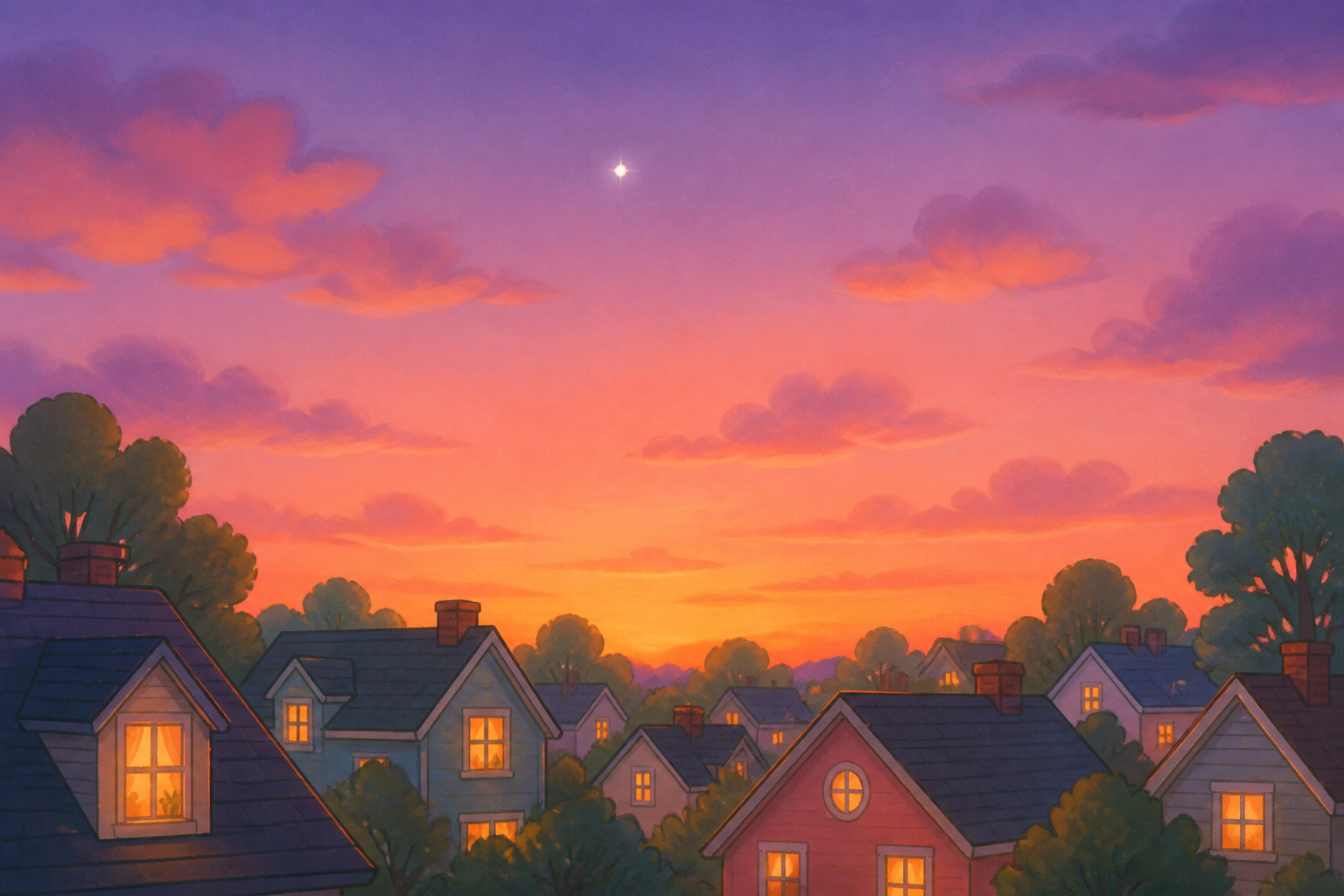
Sometimes, as the sunset colors fade, a bright point shines above the rooftops. That's Venus, looking almost like a tiny evening lantern. Why can we see Venus at sunset but not at midnight?
Venus appears near the part of the sky where the Sun sets. That sunset side will matter as the night goes on.
To understand that clue, let's start with an orbit, the path a planet follows around the Sun. Earth travels along its orbit, going around and around. Venus follows an orbit too.
Venus's orbit lies inside Earth's orbit, closer to the Sun. Think of two round tracks, a smaller one inside a bigger one. Venus follows the inside track, while Earth follows the outside track.
Because Venus follows that inside orbit, we look toward the Sun's side of space to see it. Venus can appear beside the Sun, but never across the sky from it. That's why they stay fairly close in our sky.
Can you guess where to look for Venus after sunset: near the sunset glow, or across the sky? The sunset side is the place. Venus's smaller path keeps it in that part of the sky.
Now Earth adds another movement: it turns. You turn along with Earth, even though the ground feels still beneath you. That turning makes the Sun and Venus seem to travel across the sky.
At sunset, Earth's turning carries the Sun out of your view. When Venus appears on the evening side of the Sun, it can stay above the skyline longer. You still have a view of Venus while the sunset fades.
Earth keeps turning after sunset, so that view doesn't last all night. Venus soon follows the Sun below the skyline. The solid Earth now blocks your view of it.
Around midnight, your side of Earth faces away from the Sun. Venus stays on the Sun's side of space, so it is normally out of sight too.
Orbit. Venus's orbit keeps it near the Sun at sunset, then Earth's turning usually hides it by midnight.
When you spot that bright evening dot, you can carry its quiet space story into your dreams.
 1
 2
 3
 Fenn