Why are the rock layers at the bottom the oldest?
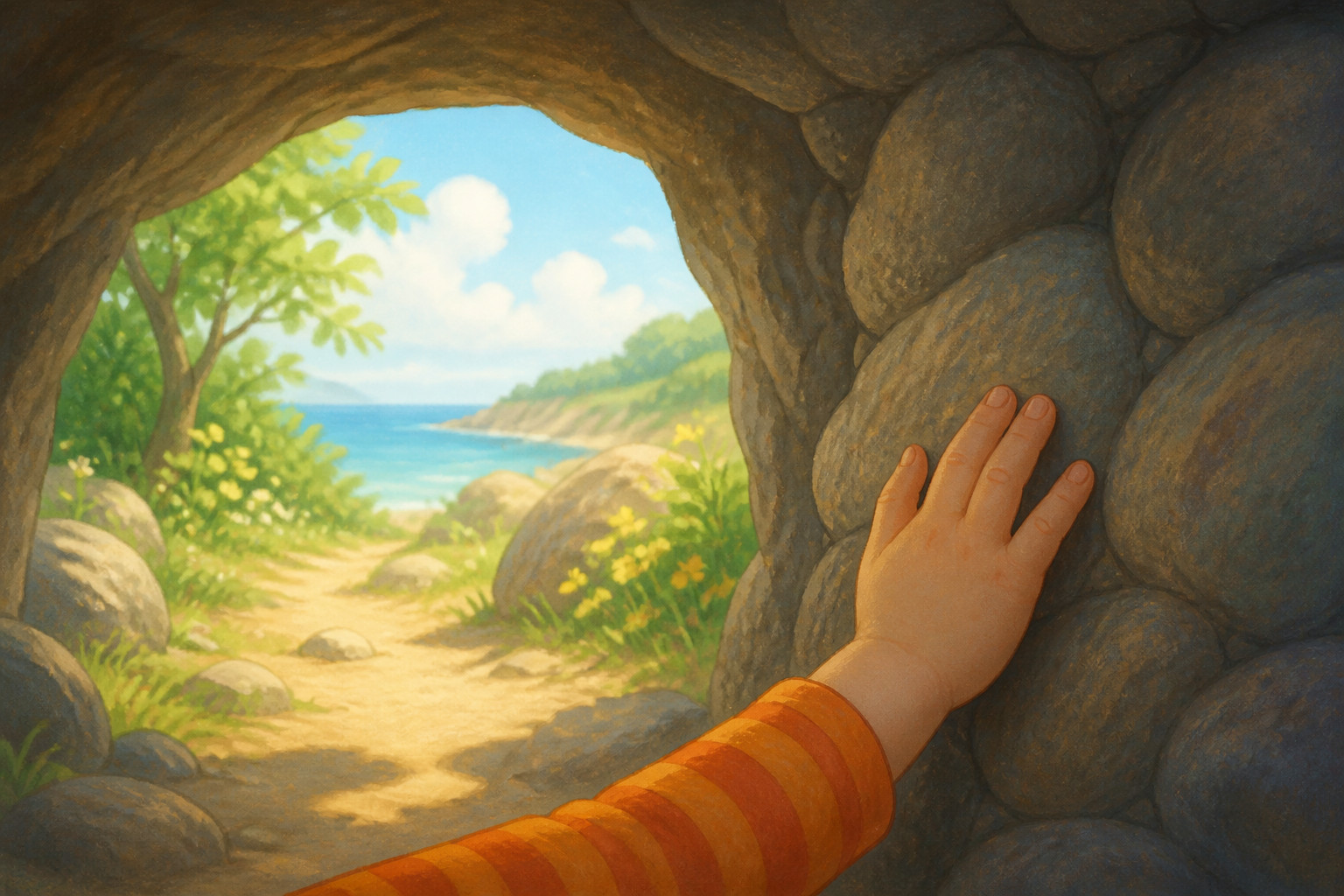
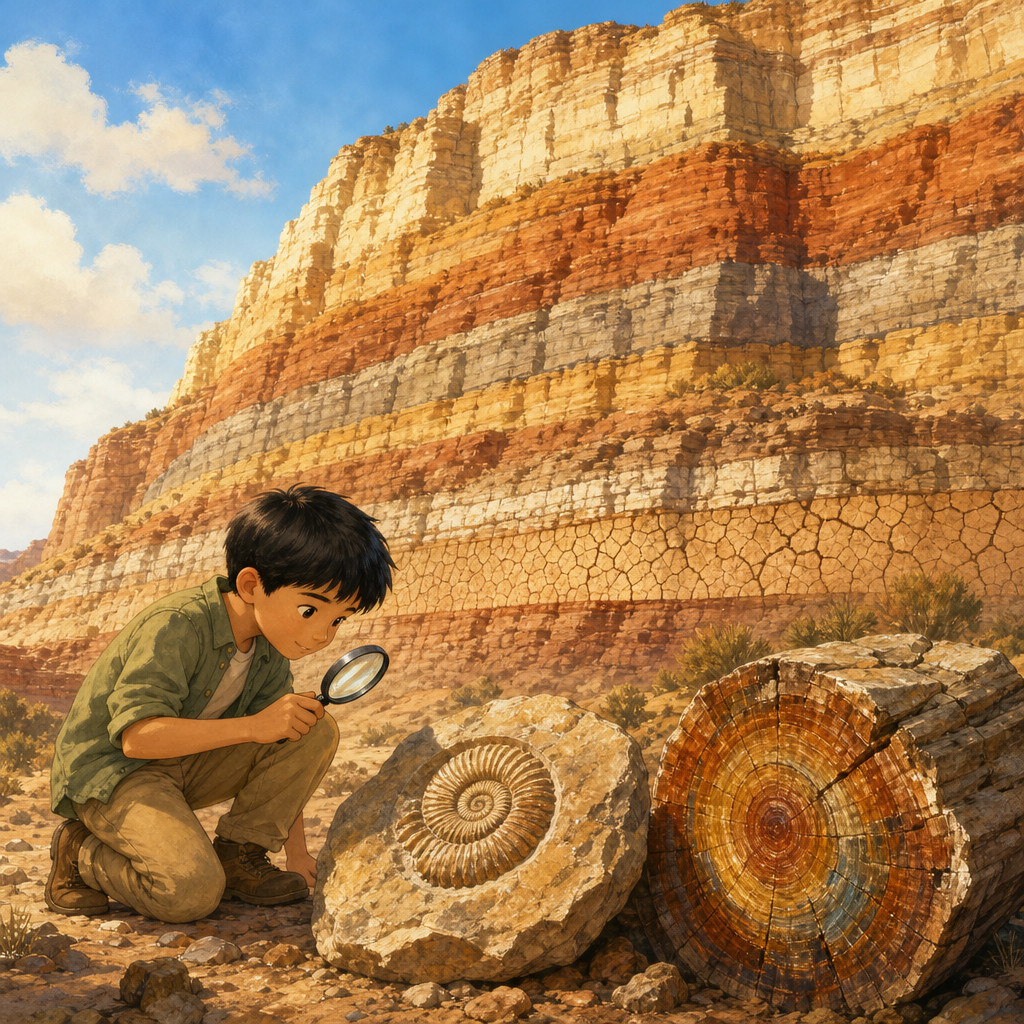
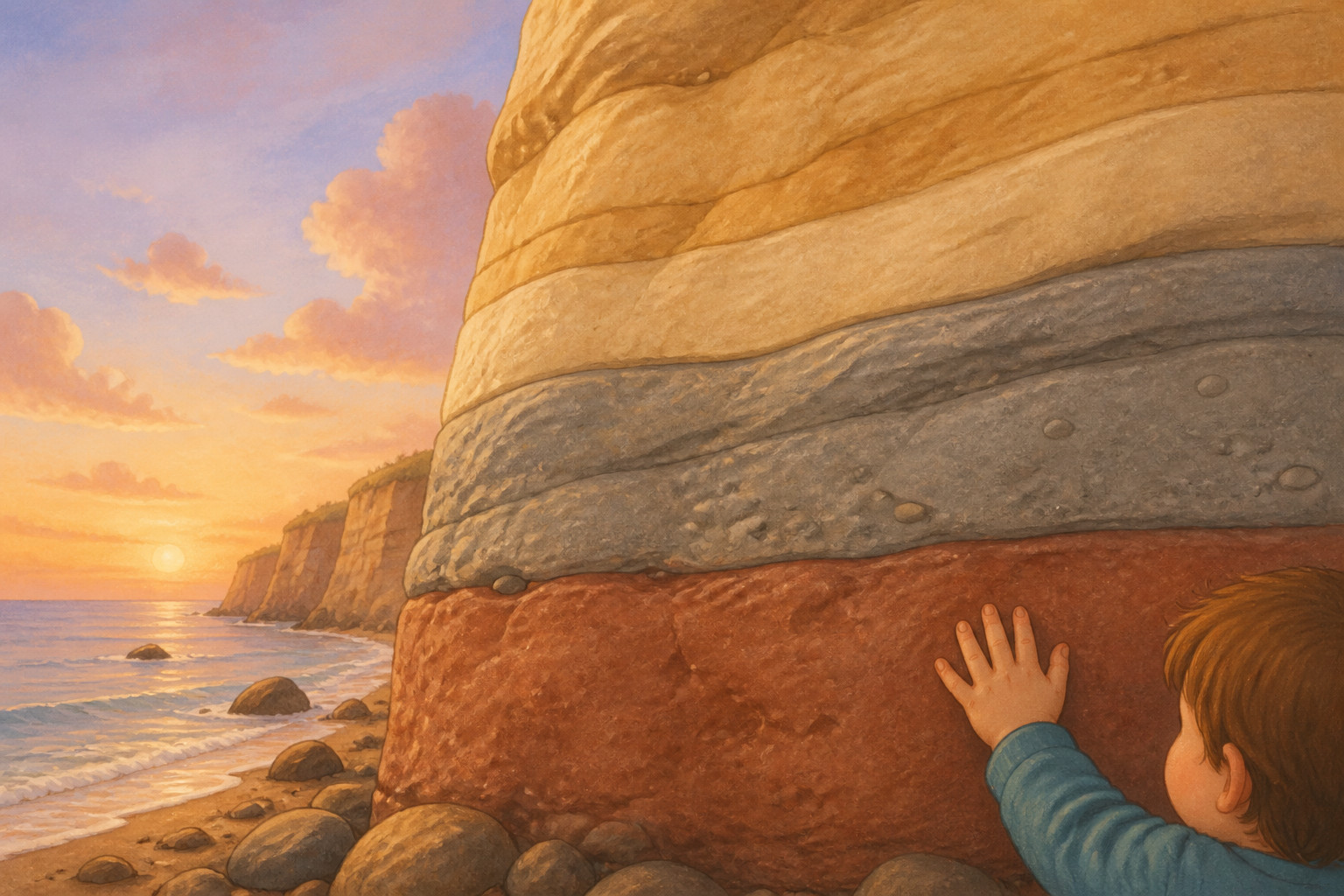
Have you ever seen a cliff or a hillside with stripes running across it, like the layers in a cake? Some stripes look tan, some gray and some reddish brown. If you ran your hand along them, you would feel each stripe, rough and gritty under your fingers.
Each of those stripes is a rock layer, and the layers at the bottom are the oldest. So why are the rock layers at the bottom the oldest? Let's find out together.
It all starts with a river. As a river rushes along, it carries sand, mud and tiny bits of shell. When it flows into a calm lake or sea, the water slows down and can no longer hold them, so they sink to the bottom. Scientists call all of it sediment, which means sand, mud and tiny bits that sink and settle in water.
The sediment spreads out across the lake floor like a soft blanket. That blanket becomes the very first layer. It lies flat because the sediment drifts down gently from the water above.
Then the river brings more sediment, year after year. The new sediment cannot slip underneath, because the first layer already covers the floor. So it settles on top, making a second layer above the first.
Layer after layer piles up, each one landing on top of the last. Over millions of years, the stack grows taller and taller, and much heavier. What do you think all that weight does to the sediment at the bottom?
The heavy layers above press down hard on the ones below. They squeeze the tiny bits so tightly that the bits stick together. Slowly, the soft sediment at the bottom turns into solid rock.
Now think about the order. The bottom layer settled first, so it has been there the longest, and that makes it the oldest. The top layer arrived last, so it is the youngest, just like a stack of drawings where your first picture ends up at the very bottom.
Sediment. Rivers drop sediment in calm water, and each new layer settles on top of the older ones, so the bottom layer, laid down first, is the oldest.
Next time you see a striped cliff, you can smile and know that its oldest layer is resting quietly at the bottom.