What would I find if I dug below the dirt?
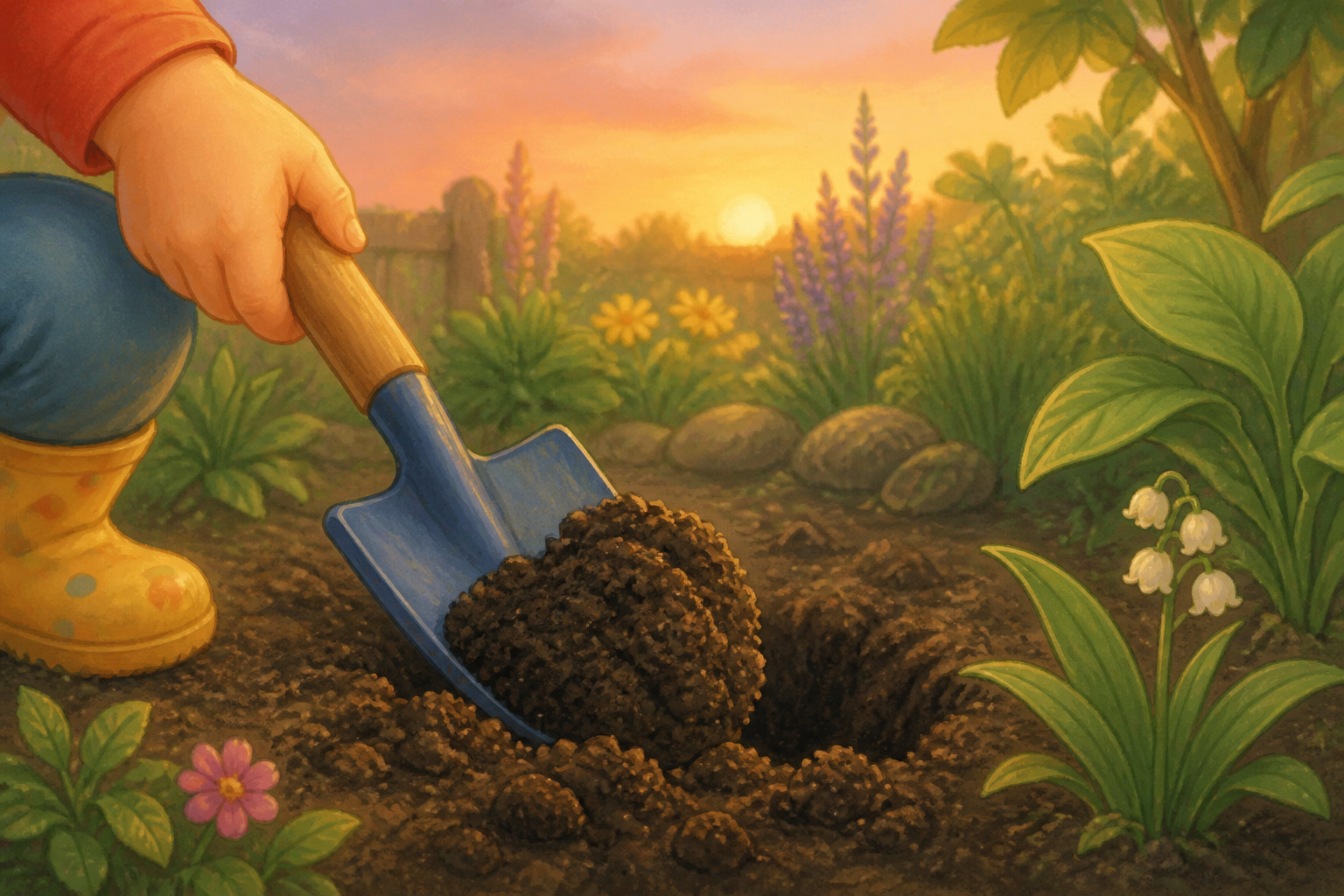
Think of a time you pushed a spade into the garden. The dirt felt cool and crumbly, and it smelled damp, like rain on the ground.
Now picture digging on and on, much deeper than that first hole. What would you find if you dug below the dirt? Let's dig down together, one layer at a time.
We call the dark dirt you dug first topsoil, which means the soft top layer of the ground. It looks dark because it is full of tiny bits of old leaves and plants, slowly breaking apart. Those bits feed the plants that grow there.
Dig deeper, below the topsoil, and the dirt changes. It looks paler, brown or yellow or reddish, because hardly any old leaves reach down this far.
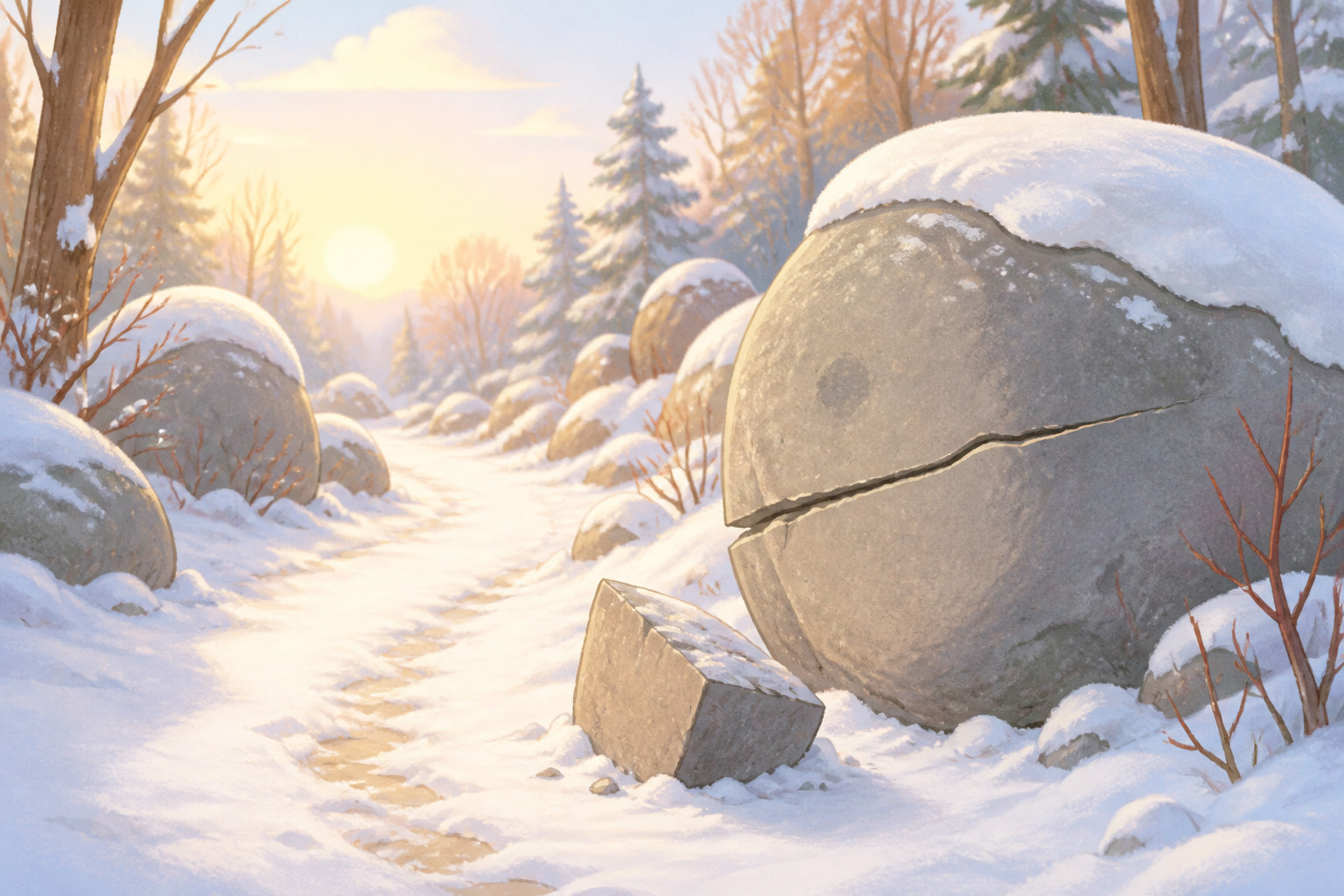
Further down in that pale dirt, your spade starts hitting stones. Near the top, rain and roots crack stones into crumbs, but down here almost nothing breaks them, so they stay big and sharp. What do you think waits under all those stones?
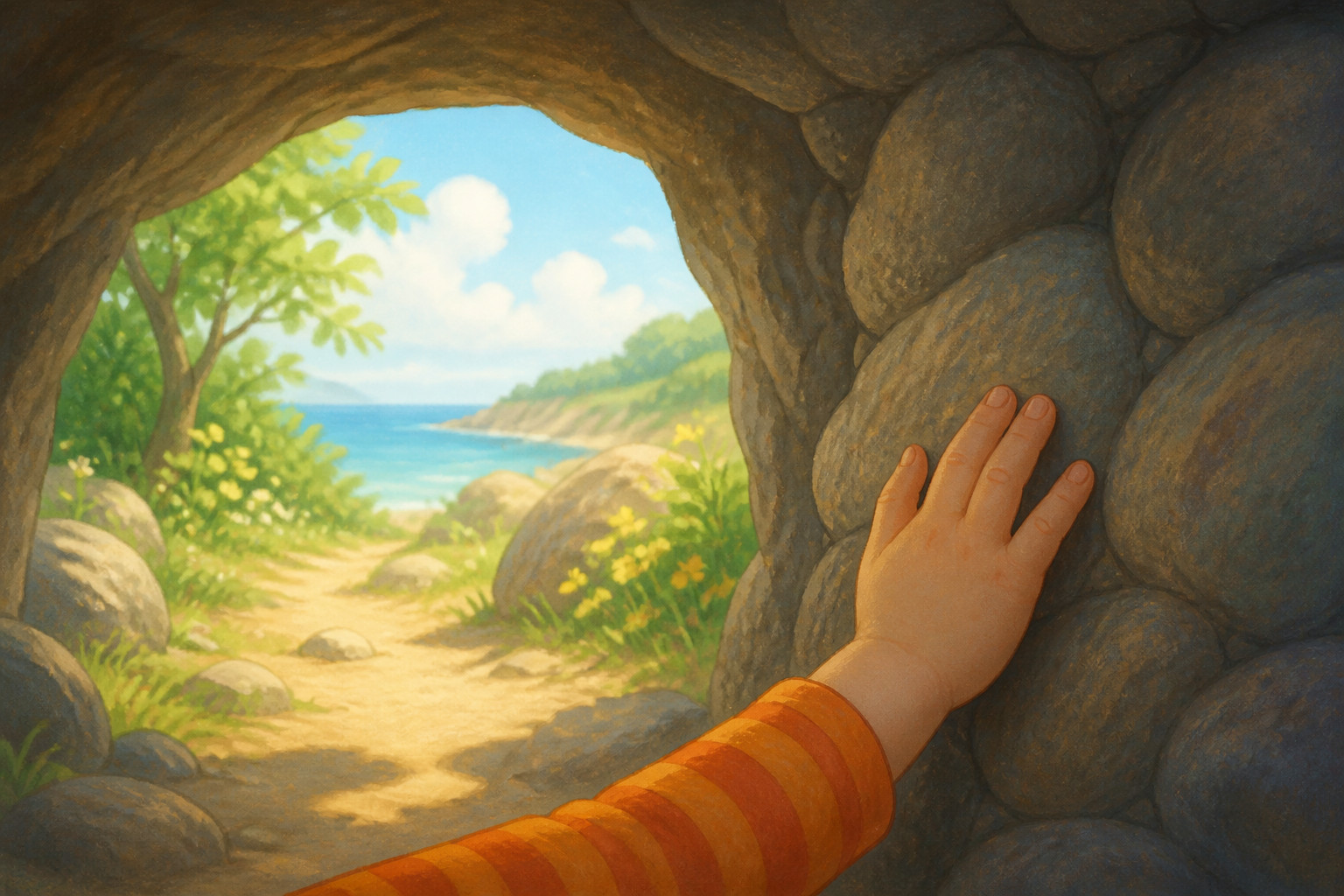
At last, the spade clinks against solid rock that stretches every way. This is bedrock, which means the hard rock that all the soil rests on.
Bedrock is far too hard for a spade to dig. Like a floor under a rug, it holds up the pale dirt and the topsoil above it.
Topsoil, bedrock. Below the dark topsoil, you find paler dirt full of stones, and under that, solid bedrock holding all the dirt up.
Next time you dig in the garden, you can picture all those quiet layers resting beneath you, one on top of another.