How does a bat find its way with echoes?
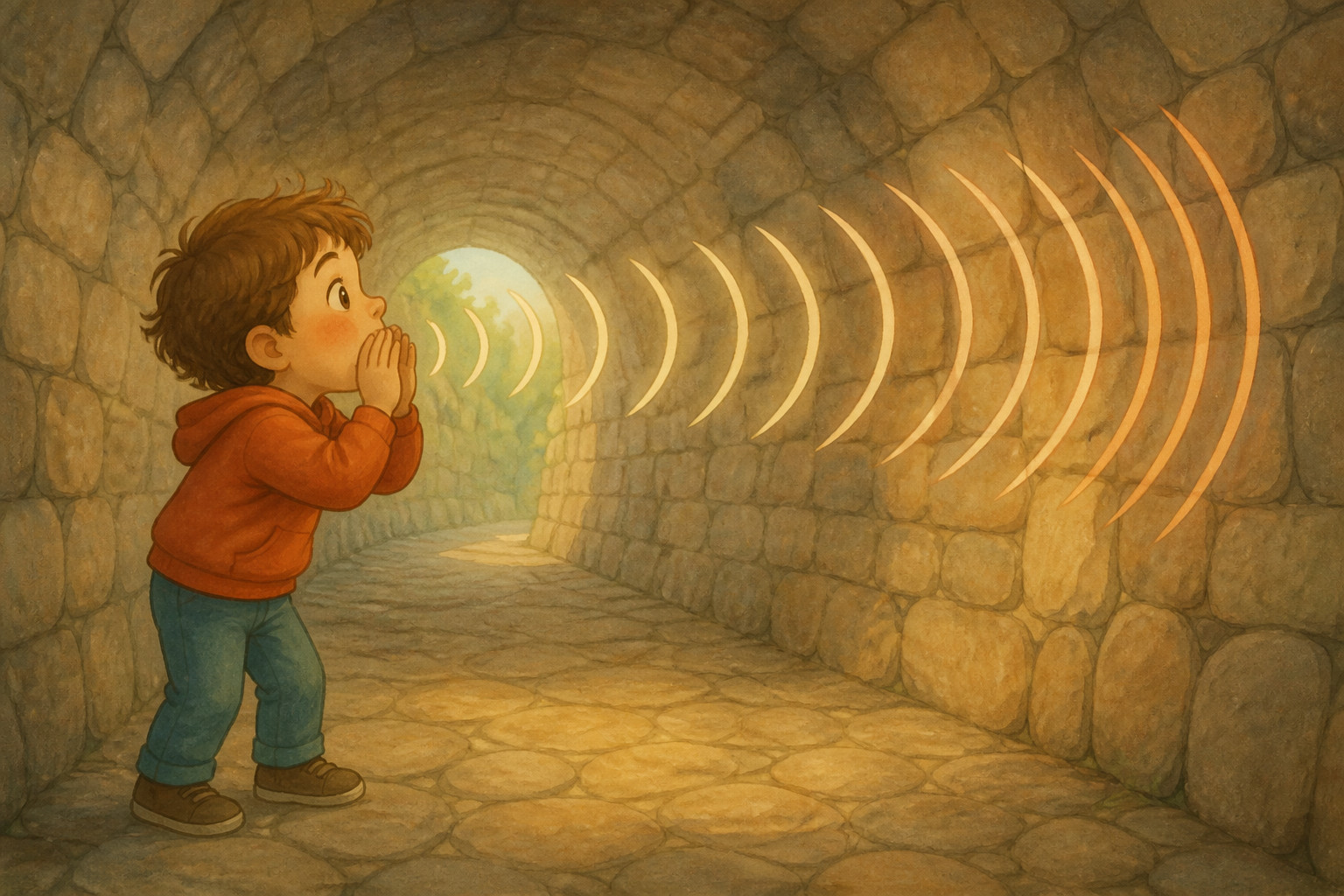
Have you ever shouted hello into a tunnel or a big empty hall? A moment later, your own voice comes back to you, a little softer. That sound coming back is an echo.
Bats fly at night, when the world is too dark to see much. They swoop past trees and catch tiny bugs without bumping into a thing. So how does a bat find its way with echoes?
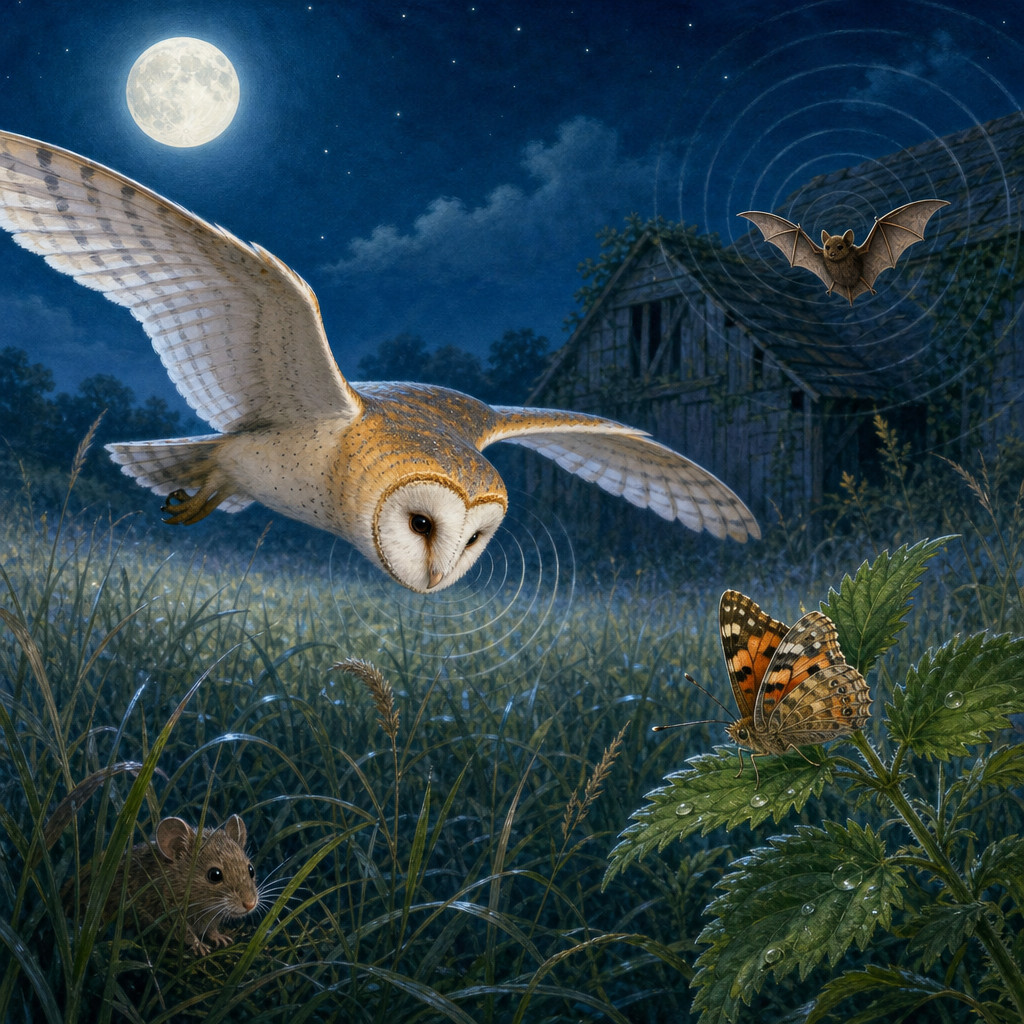
As it flies, a bat sends out quick, high squeaks ahead of itself. Those squeaks are too high for your ears to hear, but the bat uses them like a flashlight made of sound. This way of finding things is called echolocation, which means finding things by listening to their echoes.
Each squeak travels out through the dark air until it hits something, like a branch, a wall or a moth. Then the sound bounces off and flies back toward the bat. It works just like your hello in the tunnel.
The bat catches these returning echoes with its big ears. Their wide, cupped shape scoops up even the faintest sounds. That way, the bat hears every echo that comes back.
Next, the bat listens for how soon each echo comes back. An echo that returns quickly means something is close, and an echo that takes longer means it is far away. Now the bat knows how far away things are, but which way should it turn? What do you think its two ears could tell it?
An echo from the left reaches the left ear first and sounds a little louder there. An echo from the right reaches the right ear first. By comparing its two ears, the bat knows which side each thing is on.
Using echolocation, a bat hears a tree trunk ahead and a branch off to one side. It tips its wings and swerves around them. In this way, it can fly through a dark forest without a single bump.
When the bat hears a moth, it squeaks faster and faster as it gets closer. More squeaks bring back more echoes, so the bat always knows exactly where the moth has moved. Then, snap, it catches its supper right out of the air.
So, one big word to remember tonight: echolocation. A bat sends out high squeaks, catches the echoes that bounce back with its big ears, and those echoes tell it how far away things are and which way to turn.
Sleep well, and maybe tonight you can dream of gliding through the quiet dark, listening to the world sing back to you.