How do some birds crack open hard seeds?
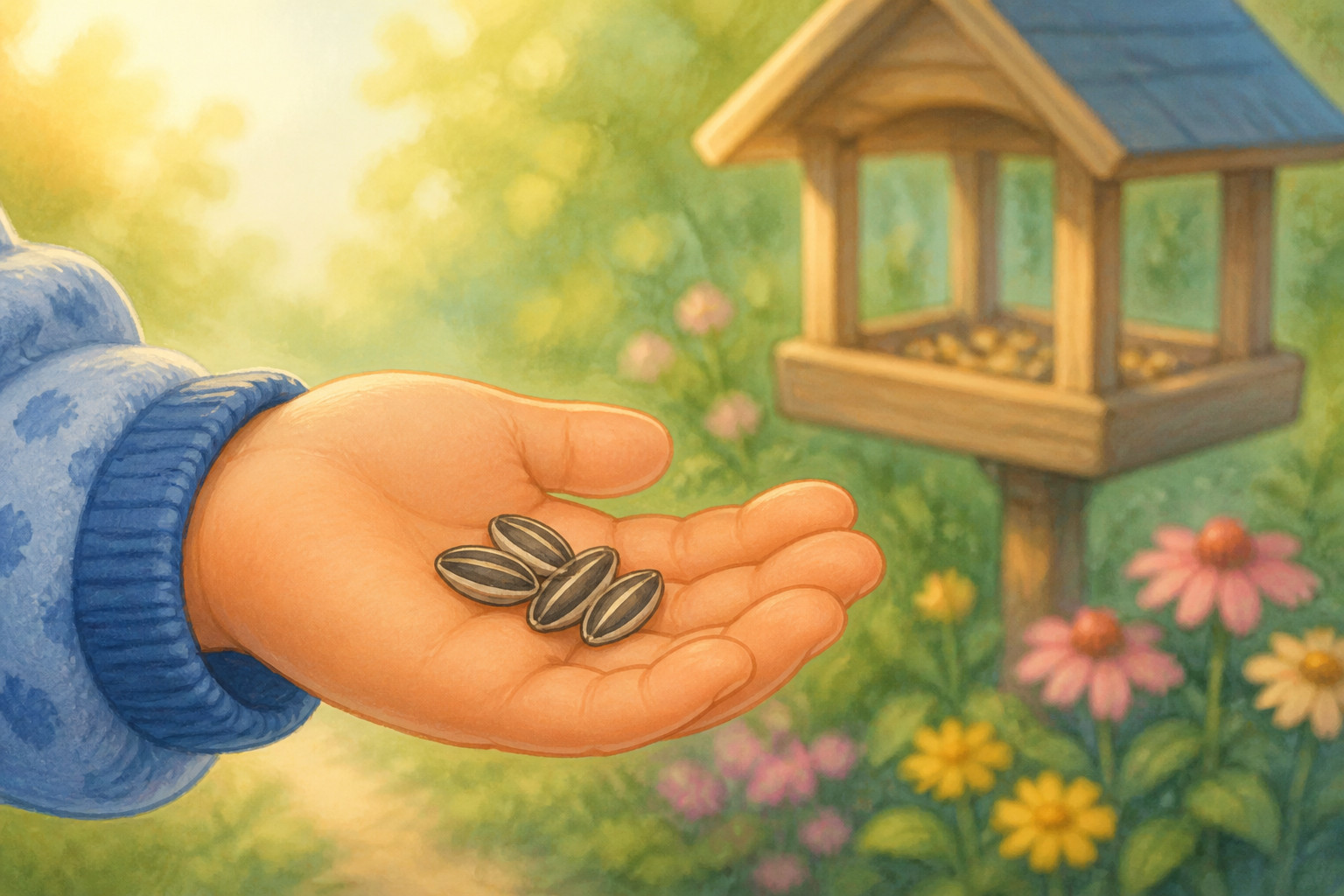
Have you ever held a sunflower seed in your fingers? Its outside feels hard and smooth, like a tiny shell. Squeeze it, and it hardly bends at all.
Yet a little bird at a feeder opens seeds like that all morning long. It has no hands and no tools to help it. So how do some birds crack open hard seeds?
The hard outside of a seed is called the husk, which means the tough cover around the soft seed inside. The husk keeps the soft part safe, like a little coat. To reach its food, a bird must break the husk first.
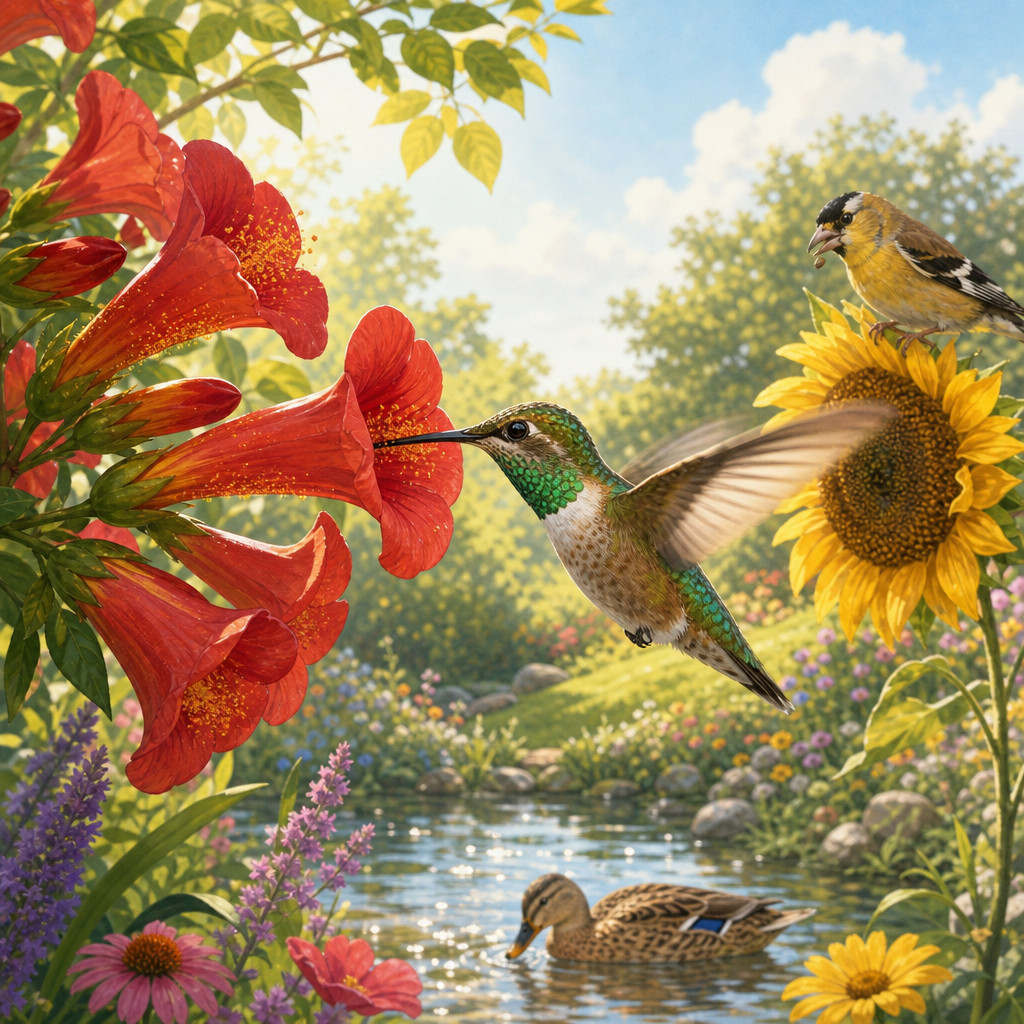
Seed-eating birds, like finches and parrots, have a short, thick beak. A thick beak is strong, like a little nutcracker. It can squeeze much harder than a thin beak. That squeeze is just what a hard seed needs.
Inside its beak, a finch has a groove, which means a little slot shaped to hold a seed. The finch tucks the seed into the groove, so it cannot slip or roll away. What do you think the bird does next?
The bird bites down hard. Strong muscles at the sides of its head pull the thick beak shut. The husk cannot hold, and crack, it splits open. It all happens in a blink.
Then the bird's tongue rolls the seed around in the groove. Its tongue pushes the broken husk pieces out of the beak. Down the pieces fall to the ground, and the soft seed is left, ready to eat.
A seed-eating bird tucks a seed in its groove, and its thick beak cracks the husk. Then the soft seed inside is ready to eat.
Under the feeder, little husk pieces pile up on the ground. Up on the perch, the finch tucks one more seed into its groove. Crack!