How can wolves help keep a deer herd healthy?
Have you ever seen deer in a picture book, or heard a wolf howl in a film? Close your eyes and imagine that long howl, ooo-ooo, drifting over a snowy forest. Wolves and deer share those same quiet woods.
Wolves hunt deer, so that sounds like bad news for the deer. Here is a puzzle to wonder about together. How can wolves help keep a deer herd healthy?
A wolf is a predator, which means an animal that hunts other animals for its food. Wolves hunt together as a family. They need meat to feed themselves and their pups.
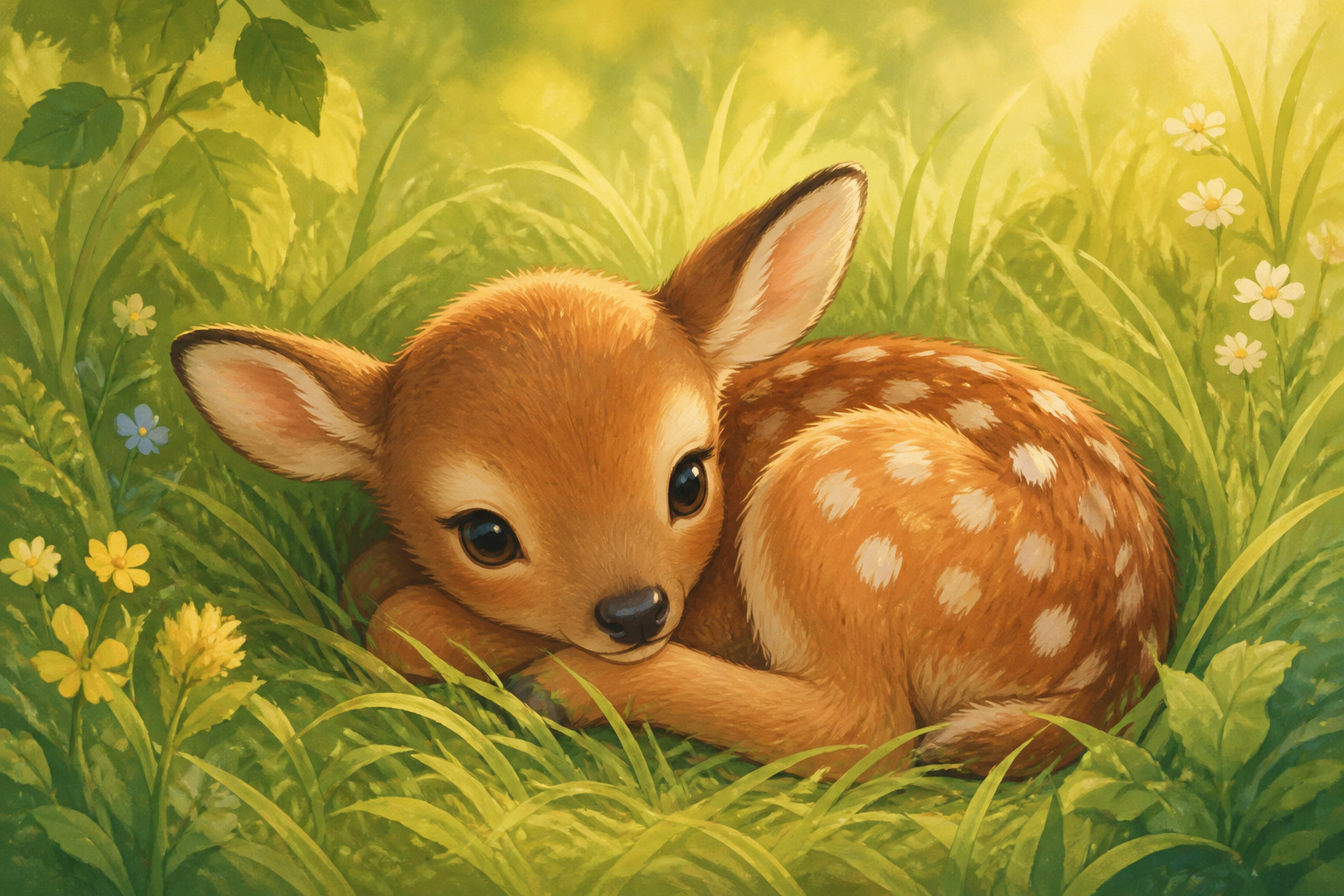
Out in a snowy clearing stands a deer herd. Most of the deer are strong and quick. A few are sick, hurt or very old, and they walk and run more slowly.
When the wolf pack runs at the herd, the strong deer leap away fast. The predators can't catch them, so the wolves chase the slow, sick deer instead. Can you guess how catching that sick deer helps all the others?
Sick deer pass their germs to the deer standing close beside them. Once the wolves catch the sick one, it can't pass its germs to any more deer. That way, more of the herd stays healthy.
Wolves help the herd in a second way too. Deer browse, which means nibbling leaves, twigs and buds off bushes and young trees. Each deer browses a lot of plants every single day.
In a forest with no predators at all, the herd would grow bigger and bigger, until the deer had browsed every bush bare. Then, in winter, the hungry deer would grow thin and weak.
Because the wolves catch some deer, the herd never grows too big. That leaves enough bushes for every deer to browse. With full tummies, the deer stay strong through the cold.
Predator, browse. Wolves are predators that catch the slow, sick deer, so those deer can't pass their germs on, and the herd stays small enough for every deer to browse plenty of plants.
Rest well now, and dream of a quiet snowy forest where a healthy deer herd and a wolf family share the woods.
 Fenn