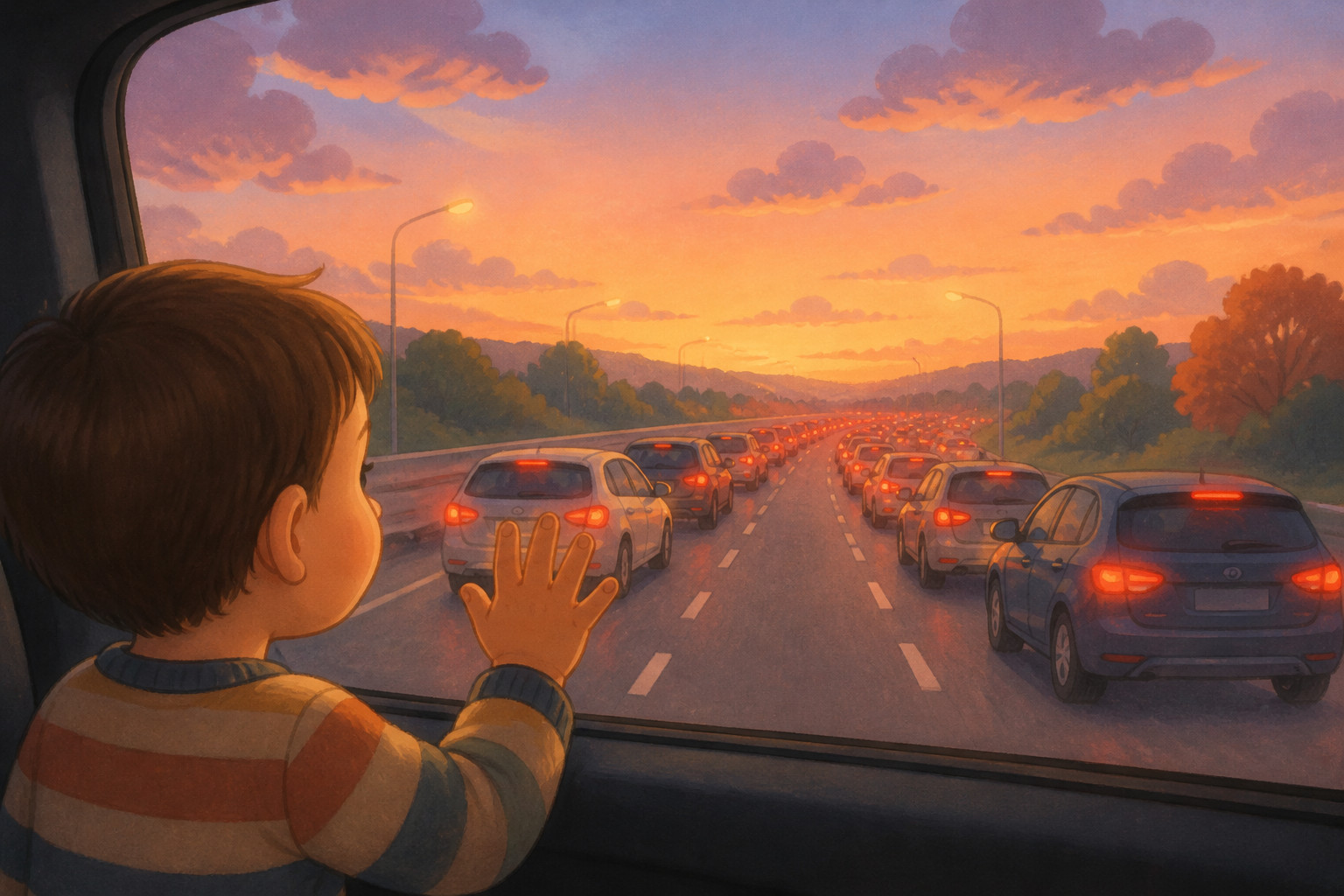
How can one more car slow down the whole road?
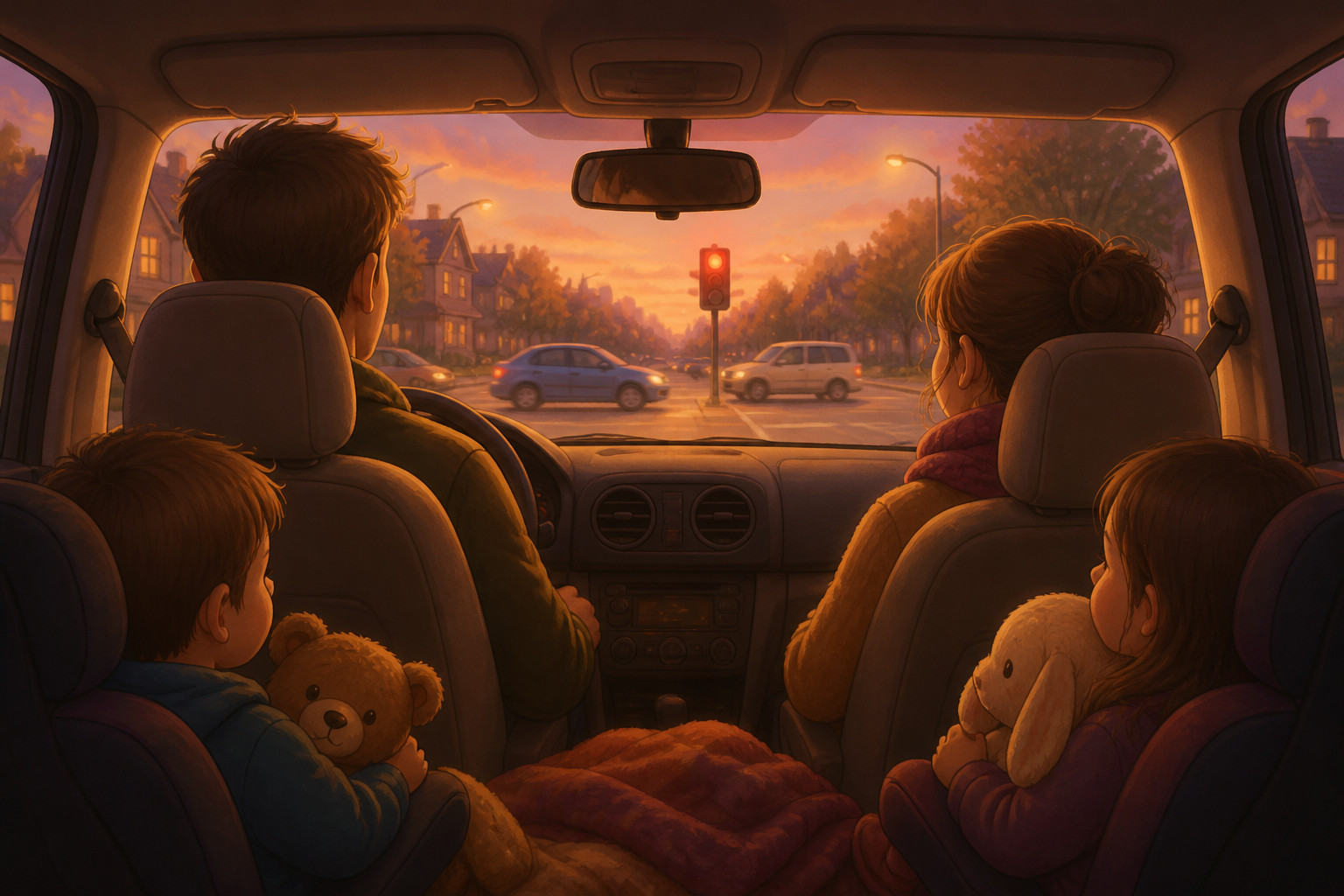
Think of a car ride on a big, busy road. Through the window, you see a long line of red brake lights glowing, and you feel your car roll slowly, then stop. A little later, everyone moves again, and nothing was in the way at all.
So here is the puzzle. People say one more car can make all of that happen. How can one more car slow down the whole road?
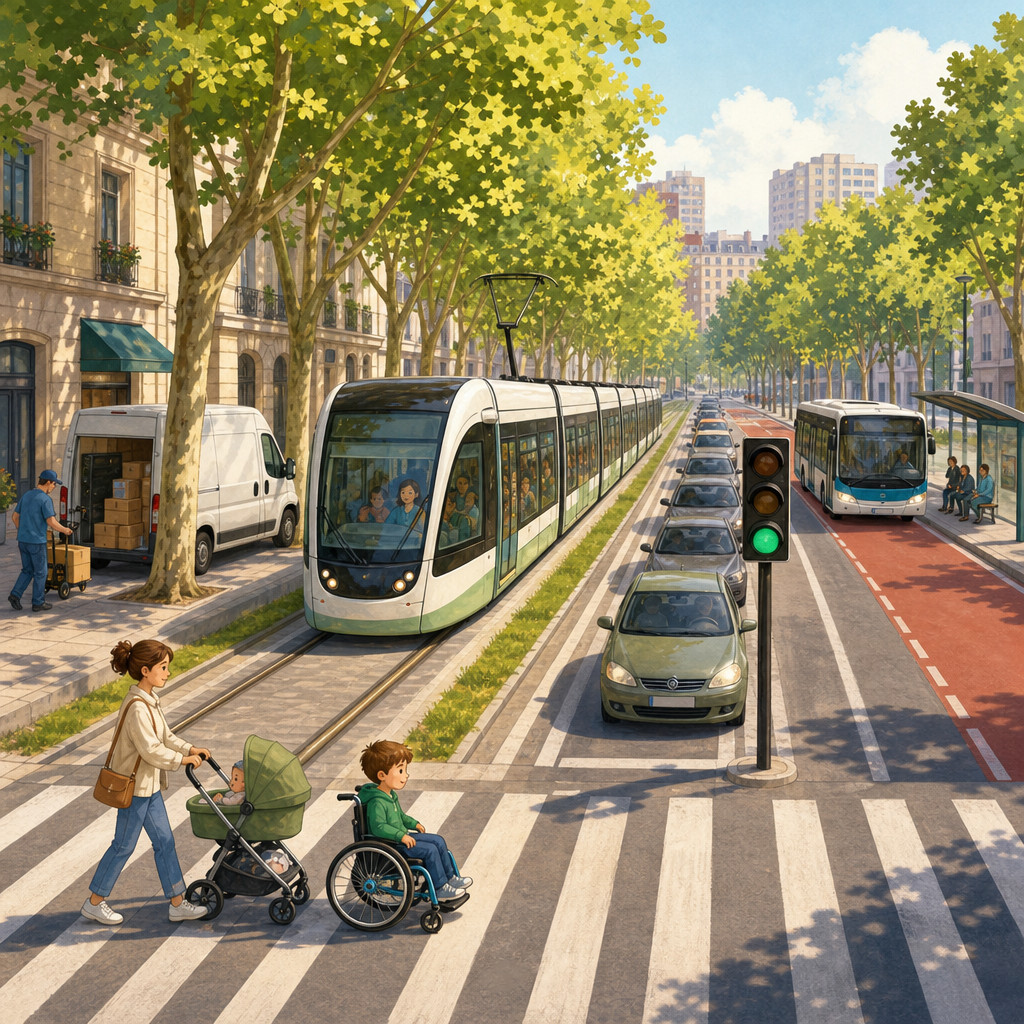
On a busy road, lots of cars drive close together. Every driver keeps a gap ahead, so there is room to stop in time. When the road is this full, the gaps are already as small as drivers feel safe with.
Now one more car slides into the line, right into one of those small gaps. Suddenly the driver behind it is much too close. So she presses her brake to slow down and make her gap big again.
Her red brake lights shine for the driver behind her. He needs his reaction time, which means the short moment a person needs to see something and move. During that moment his car keeps rolling closer, so he has to brake harder than she did. What do you think the driver behind him will do?
That next driver brakes even harder, because during his own reaction time, his car rolls closer too. Then the driver after him does the same, and the one after that. With every car, the slowing grows a bit stronger.
This growing slowdown moves backward along the line, from car to car. People call it a traffic wave, which means a slowdown that travels back through the cars while the cars themselves drive forward. Far back in the line, the traffic wave grows so strong that drivers have to stop completely.
Meanwhile, up at the front, the extra car and the drivers near it are already speeding up again. But the traffic wave keeps rolling back through the line behind them. That is why the long line you saw stopped, even with nothing in the way.
When one more car squeezes into a full road, the driver behind it brakes to make her gap big again. Because of each driver's reaction time, every next driver brakes a bit harder, so a traffic wave rolls back through the line and slows the whole road.
Far back in the line, red brake lights glow one after another, like a ripple running backward. And up at the front, the cars are already rolling forward again.