How do handlebars make a bike turn?
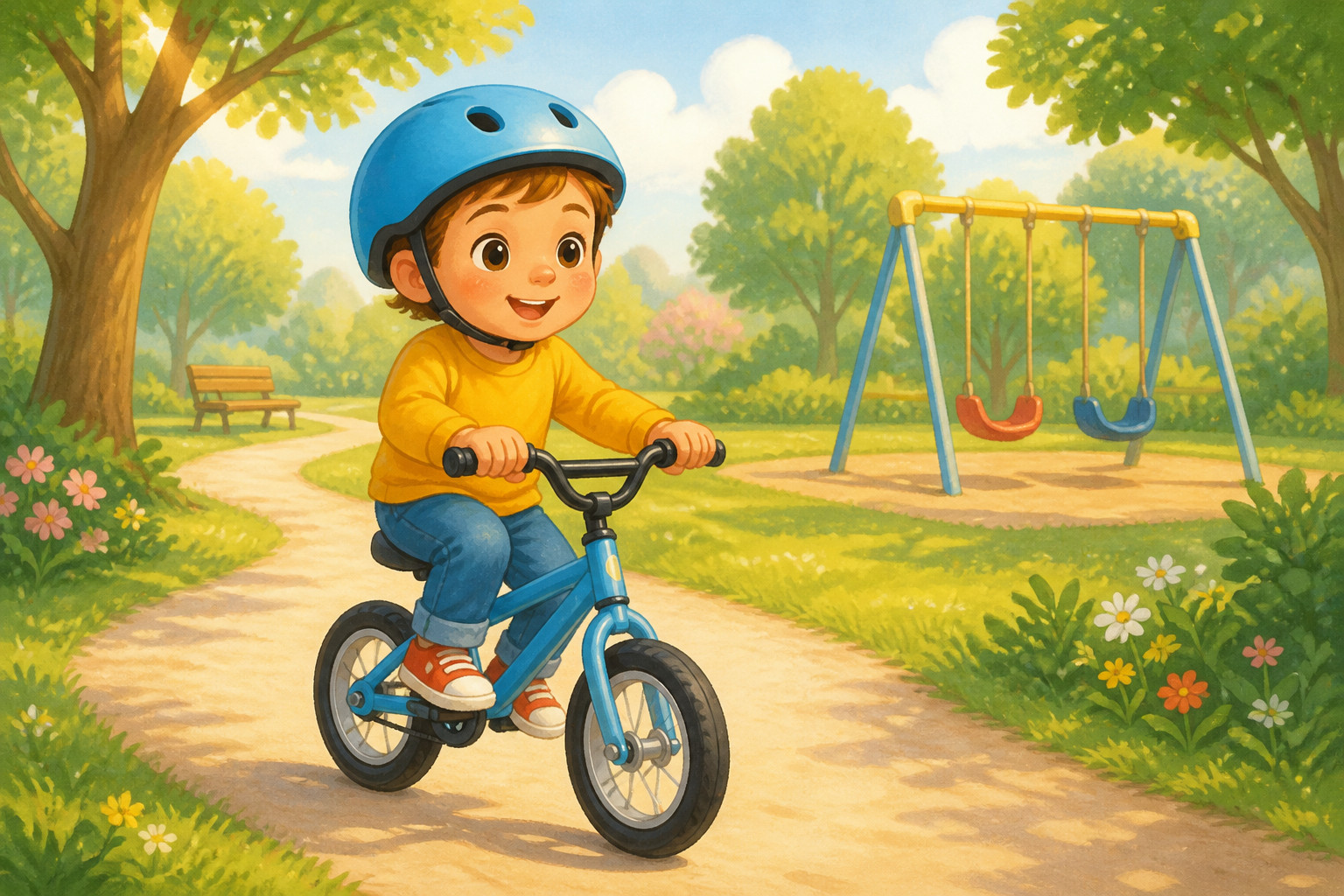
Picture yourself on a bike in the park. Your helmet sits snug on your head. Your hands hold the soft rubber grips on the handlebars. Can you feel them, bumpy and warm under your fingers?
Your bike rolls gently along the smooth path. Up ahead, the path bends toward the swings. You move the handlebars, and the bike goes around the bend. How do handlebars make a bike turn?
To head toward the swings, you push one handle forward. Your other hand pulls the other handle back. Together, your two hands twist the handlebars around. The handlebars swing around in a small curve.
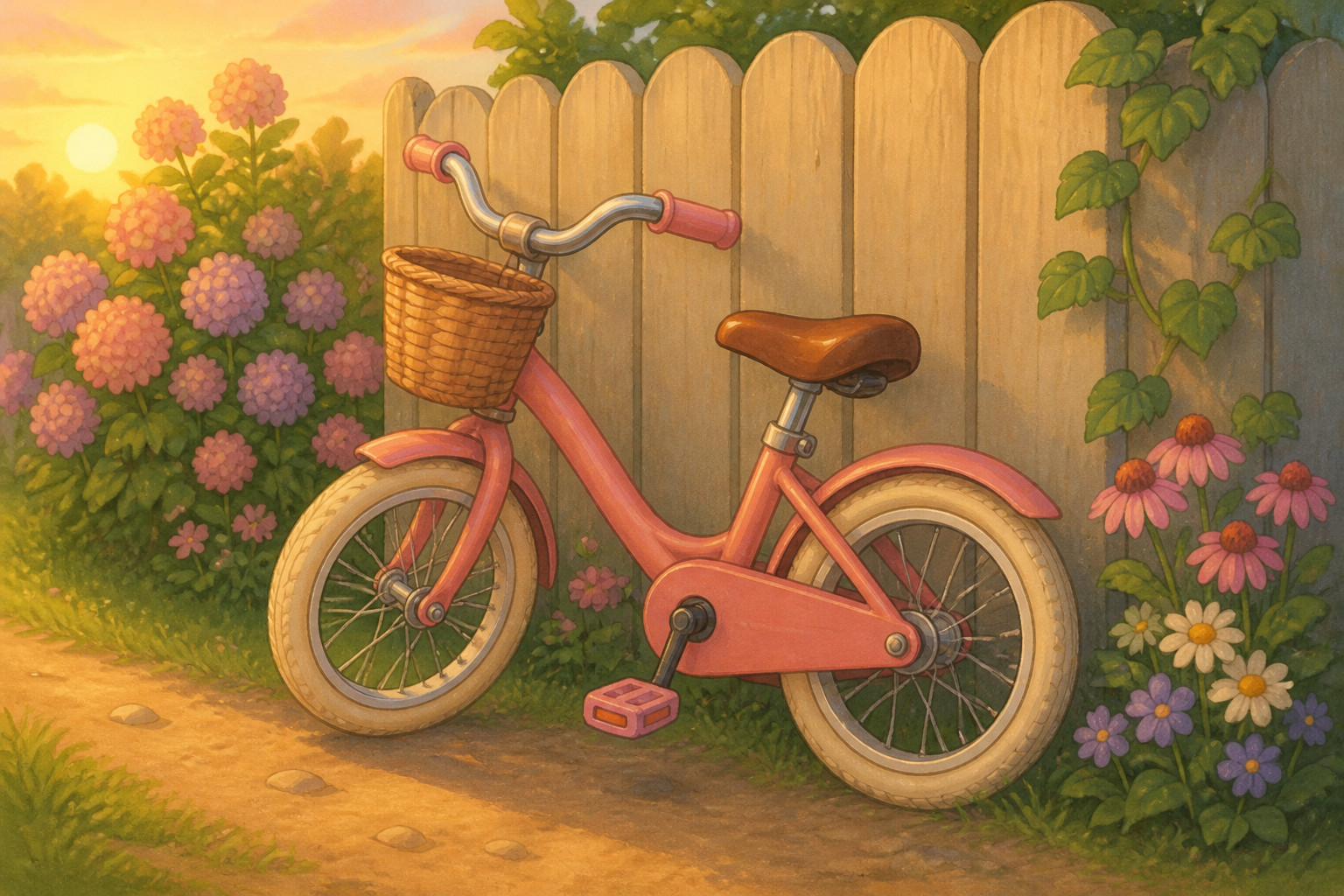
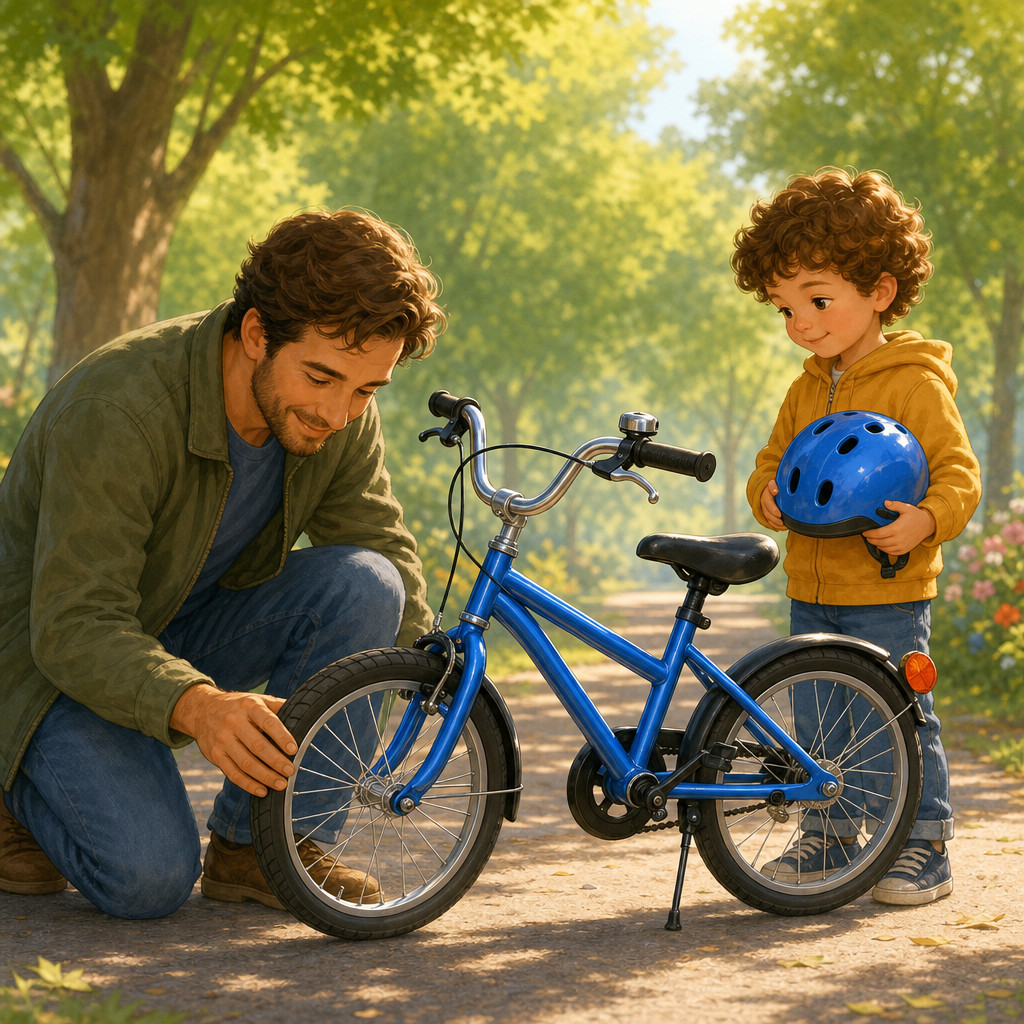
Under the handlebars sits a fork, which means the metal part that holds the front wheel. It has two long arms, one on each side of the wheel. The handlebars and the fork hold on to each other. So when you twist the handlebars, the fork twists with them.
The fork grips the front wheel by its middle. So when the fork twists, the front wheel twists too. The front wheel turns just as far as the handlebars do. Now the front wheel points toward the swings.
A wheel rolls the way it points. So the front wheel rolls toward the swings. The front of the bike goes that way too. What do you think the back wheel does now?
The bike holds both wheels together, so the back wheel follows right behind. It rolls after the front wheel, like a little duckling after its mother. Soon the whole bike curves around the bend toward the swings.
Your hands twist the handlebars, and the fork twists the front wheel with them. The front wheel rolls where it points, and the whole bike follows.
The bike glides all the way around the bend. The swings sway softly right beside you. Your wheels roll slowly to a quiet stop.