Why do traffic jams happen?
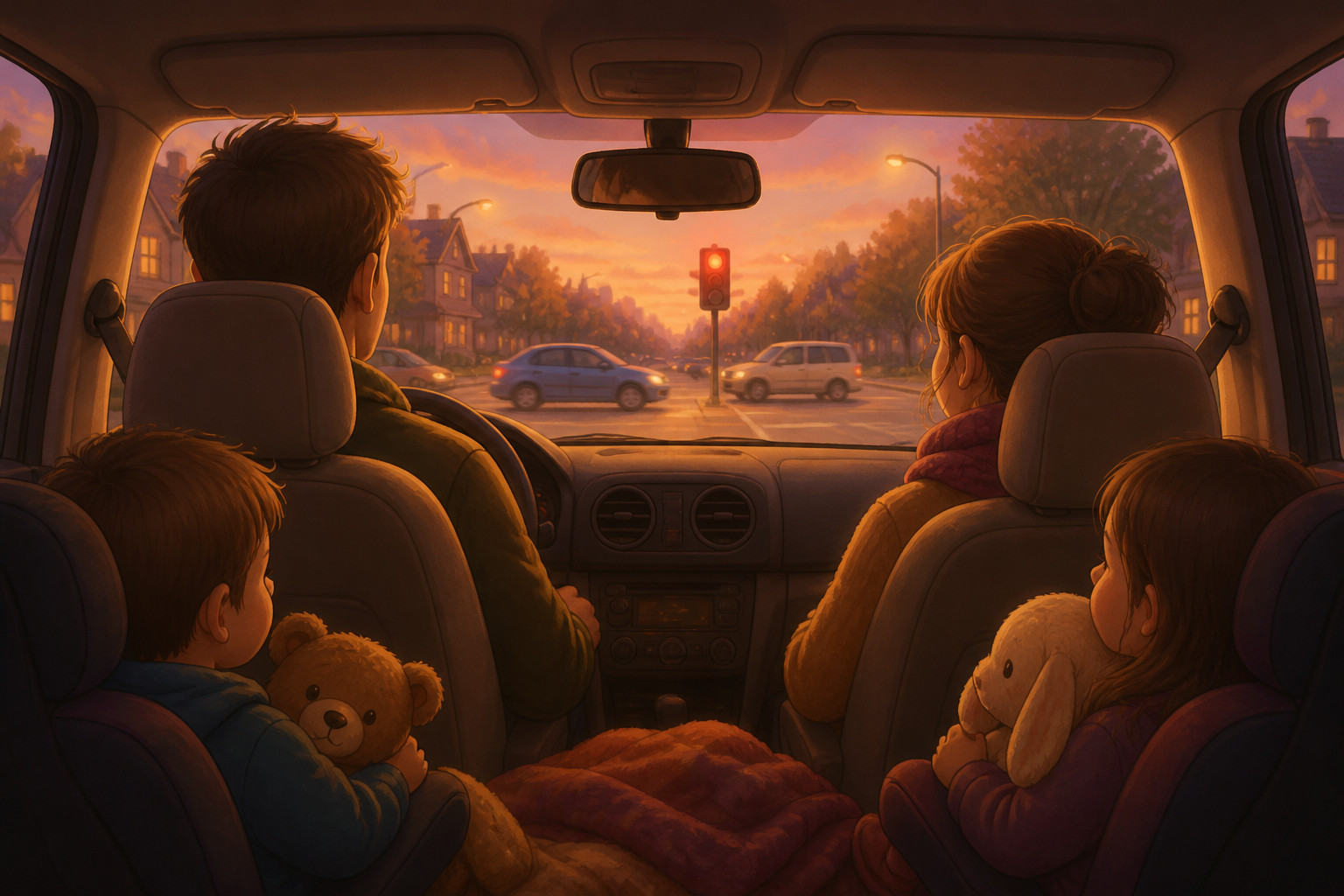
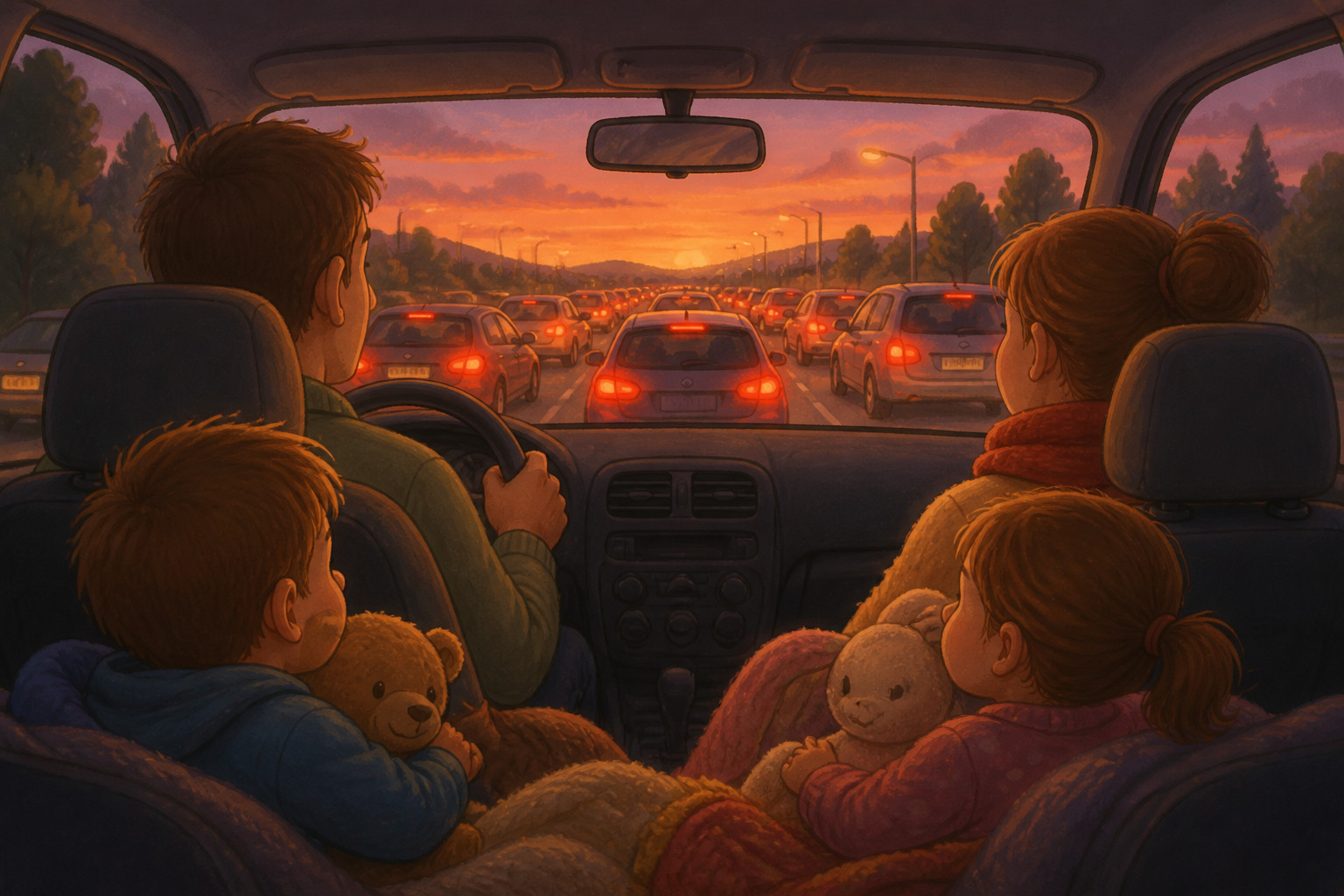
Have you ever sat in the back seat while your car crept along, stop and go, stop and go? Out the window, you could see red brake lights glowing on every car ahead. Nobody wanted to go slowly, yet everyone did.
So why do traffic jams happen? Let's follow the cars on a busy road and find out together.
In the morning, lots of drivers head out at the same time, on their way to work and school. Every car needs its own space on the road, plus a safe gap in front of it. When all those cars fill up that space, the road is packed.
Up ahead, two lanes squeeze into one lane before a bridge. This narrow spot is called a bottleneck, which means a place where the road gets tight, like the thin neck of a bottle.
At the bottleneck, drivers take turns to slip into the one lane. One lane lets through only about half as many cars as two lanes, but cars keep arriving from behind as fast as before. Like water glugging slowly out of a bottle's thin neck, the cars pile up behind the bottleneck.
Now a driver in the long line taps the brakes to keep a safe gap, and the red lights flash on. The driver behind sees those lights a moment later, after rolling a bit closer. What do you think that second driver has to do?
That driver has to brake a little harder, to keep from getting too close. The next driver brakes harder still, and the one after that brakes even harder. Soon a car far behind has to stop completely.
Drivers call this a traffic wave, which means a slowdown that rolls back along a line of cars, like a ripple spreading across a pond. The wave rolls backward, even while every car is trying to go forward.
On a packed road, the gaps between cars are short, so no driver has room to slow down gently. Each traffic wave grows bigger as it rolls back, until whole rows of cars stand still.
Bottleneck. Traffic wave. Traffic jams happen when lots of drivers arrive at a bottleneck faster than it can let cars through, and when one driver's braking makes each driver behind brake harder, sending a traffic wave back along the road.
Next time you see a long row of glowing brake lights, you will know just what is happening up ahead, clever traveler.