How can one flask keep soup hot and juice cold?
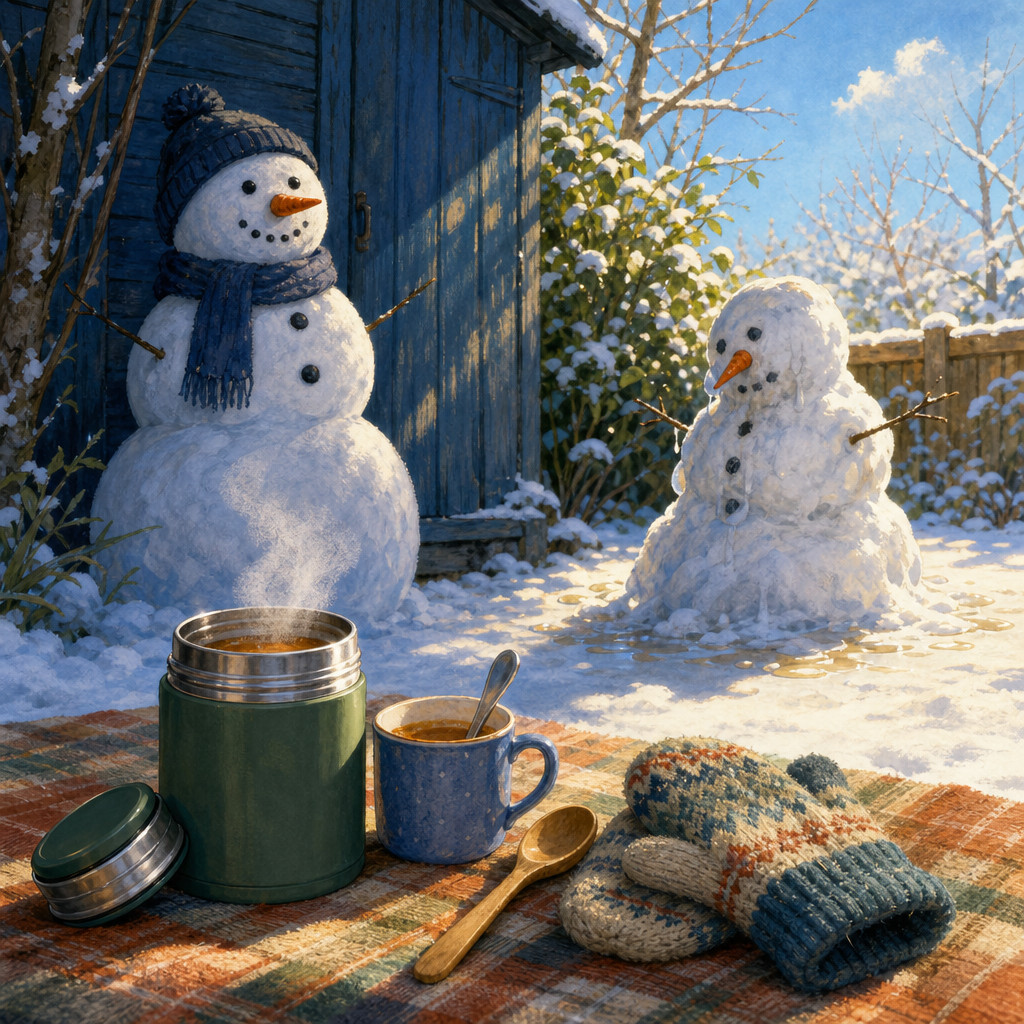
Picture a cold, windy afternoon at the park. You open your flask, and warm steam curls up from your soup, smelling of carrots and pepper. On a hot summer day, that same flask pours out juice that still feels icy on your tongue.
One flask, two different jobs. How can the very same flask keep soup hot and juice cold? Let's find out together.
To understand the flask, we start with heat. Heat always moves from something warmer to something cooler. That's why a hot mug warms your hands, and why an ice cube makes your palm feel cold as your heat flows into it.
Heat travels by passing from one tiny bit of stuff to the next, like a ball handed down a long line of children. In an ordinary cup, the soup hands its heat to the cup wall, and the wall hands it to the air outside. Bit by bit, the soup cools down.
Now peek at how a flask is built. It has two walls, one inside the other, like a cup tucked inside a slightly bigger cup. Between those two walls, there is almost no air at all.
That empty gap has a special name: a vacuum, which means a space with almost nothing in it, not even air. A vacuum is like that line of children with a big empty stretch where nobody stands. With nobody there to pass it along, the heat gets stuck.
So when you pour in hot soup, its heat reaches the inside wall and then meets the vacuum. The heat can barely cross, so it stays in the soup for hours. What do you think happens when you fill the same flask with cold juice on a hot day?
The vacuum works the other way too! The warm air outside wants to send its heat into the cool juice, but the vacuum blocks the path, so the juice stays cold. A flask never makes anything hotter or colder; it slows heat down in both directions.
The tight lid helps as well. Without it, warm steam would drift out of the top of your soup, and warm air would sneak in over your juice. When you twist the lid on, you close that last open door.
Today's key word is vacuum. Heat always moves from warm to cool, and the vacuum between a flask's two walls blocks its path both ways, so soup keeps its heat and juice stays cold.
Next time you twist open a flask, you can smile and remember the tiny empty space that keeps your treat just right.