Why isn't a mushroom a plant?
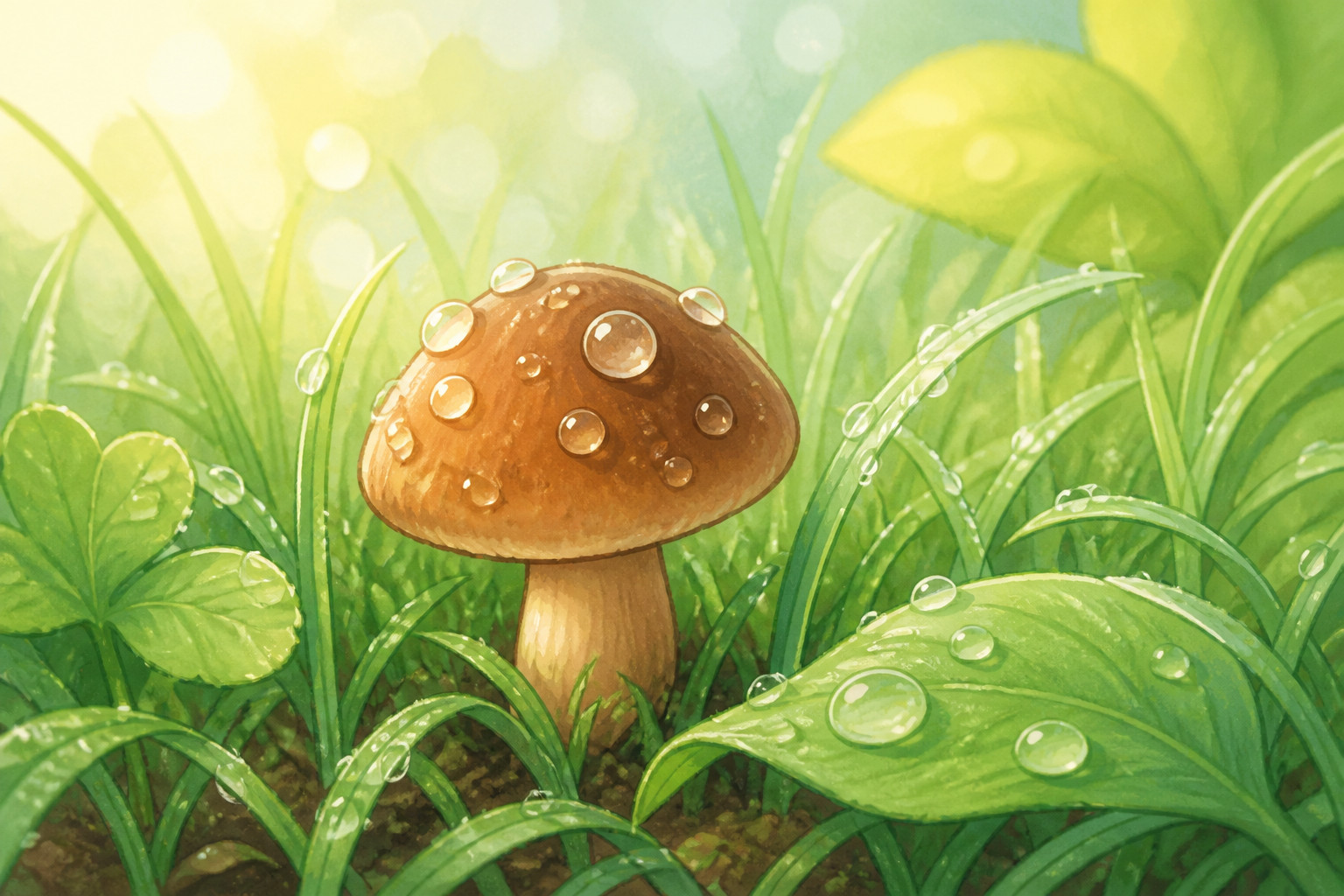
Have you ever spotted a mushroom popping up in the grass after a rainy day? Maybe you crouched down close and smelled its damp, earthy smell. It grows right out of the ground, the way a flower does.
So a mushroom looks a lot like a small plant. Yet people who study living things say it is not a plant at all. Why isn't a mushroom a plant?
Let's start with a plant, like a tall sunflower. Its green leaves catch sunlight and use it, with water and air, to make the plant's own food. That is why plants reach toward sunny spots to grow.
Now think about a mushroom. It has no green leaves at all, so it cannot make food from sunlight. Where do you think a mushroom gets its food, then?
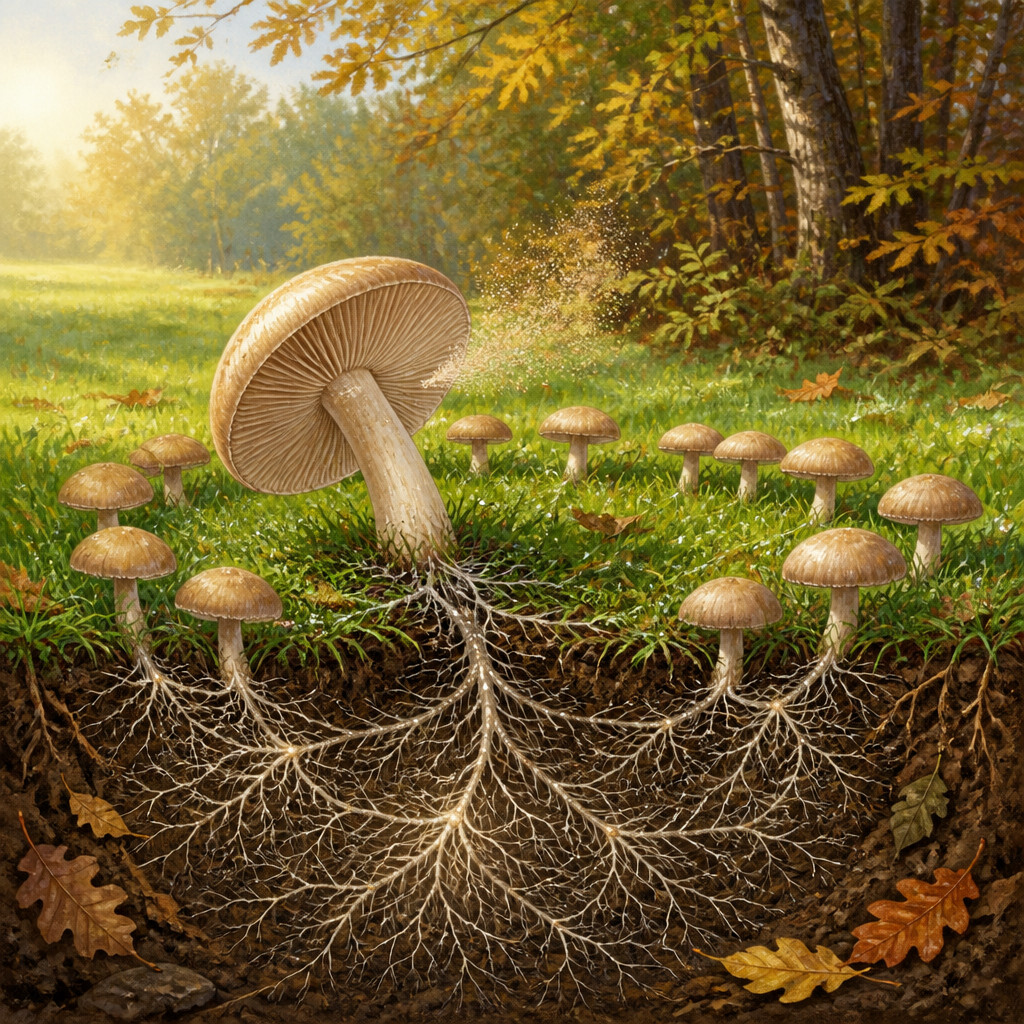
Under the ground, a mushroom has tiny white threads, thinner than a hair. They spread out through the soil and into fallen leaves and old logs. These threads are how the mushroom reaches its food.
The threads soak up food from the dead leaves and wood, little by little. The trees made that food back when those leaves were green, using sunlight. So a mushroom does not make its own food; it takes food that plants already made.
That is why a mushroom is a fungus, which means a living thing that soaks up its food instead of making it. Plants make their food, and a fungus finds its food. A fungus is its own kind of living thing, not a plant.
A mushroom has no green leaves to make its own food from sunlight, so its tiny threads soak up food from dead leaves and wood. A living thing that gets its food this way is a fungus, not a plant.
Out in the sunny field, the tall sunflower turns its green leaves toward the light. Down in the cool, damp soil, the thin white threads of the fungus spread through the old leaves, while the little mushroom stands quietly in the grass above them.