Why are some rainbows so hard to see?
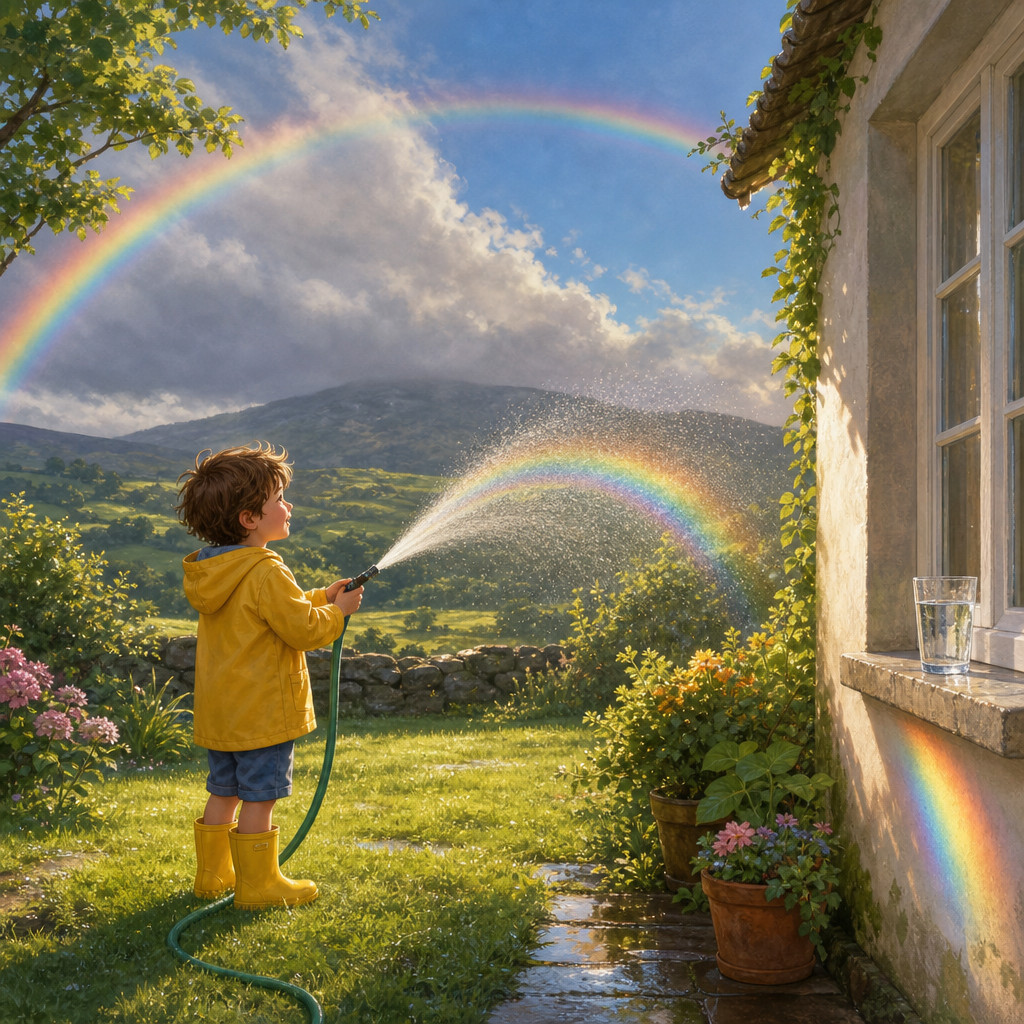
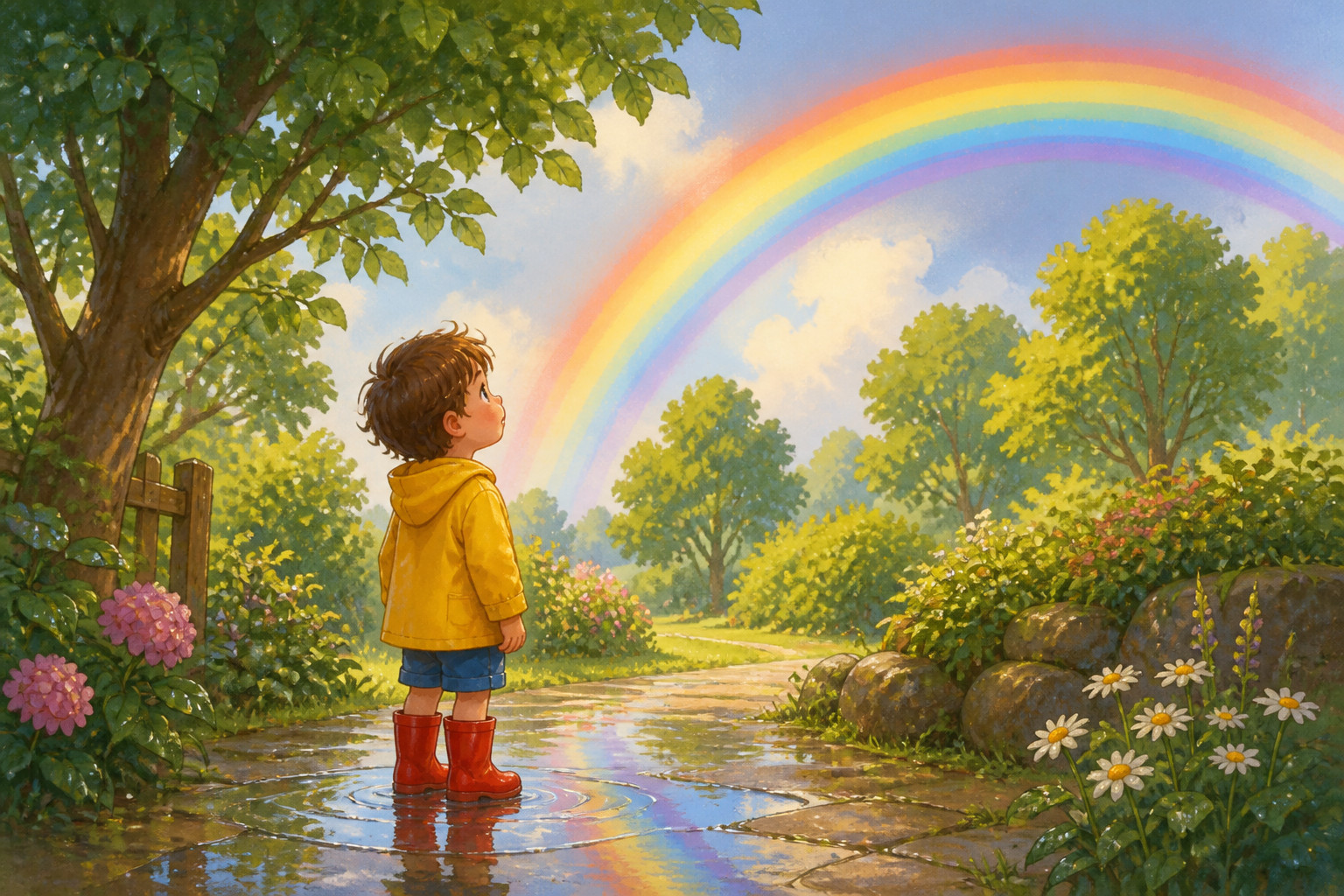
Think of a day when rain fell and then the sun came out. Can you remember the cool, wet smell of the air? Up in the sky, a rainbow stretched its stripes of color.
Some rainbows shine bright, like fresh new crayons. Others look so pale that you have to squint to find them. So why are some rainbows so hard to see?
A rainbow starts with the sun. The sun shines from behind you, and rain falls across the sky ahead. Sunlight pours right into all those falling raindrops. That light is what makes the rainbow.
Each tiny raindrop splits the sunlight into colors. Then it sends a little of that color back toward your eyes. Lots and lots of drops shine together, and you see a bow of color.
Now picture a thin, misty sky in front of the sun. We call that haze, which means a thin, cloudy layer that dims the sun. Haze lets only weak, pale sunlight through to the rain. What do you think happens to the rainbow now?
The raindrops get just a little light. So they send back just a little color. The rainbow turns pale and faint, like soft chalk lines on a path.
Pale colors are hard for your eyes to find. You look and look, and you can hardly spot the rainbow. So a hazy sun makes a rainbow very hard to see.
On a clear day with no haze, strong sunlight fills every drop. Each drop sends back bright, bold color. Then the rainbow glows clearly against the sky.
When haze dims the sun, raindrops get little light and send back pale, faint colors. Those pale colors make the rainbow hard to see.
Up in the misty sky, a pale rainbow hangs over the falling rain. Its soft colors glow faintly, like chalk lines on a wet path.