What is a handful of soil made of?
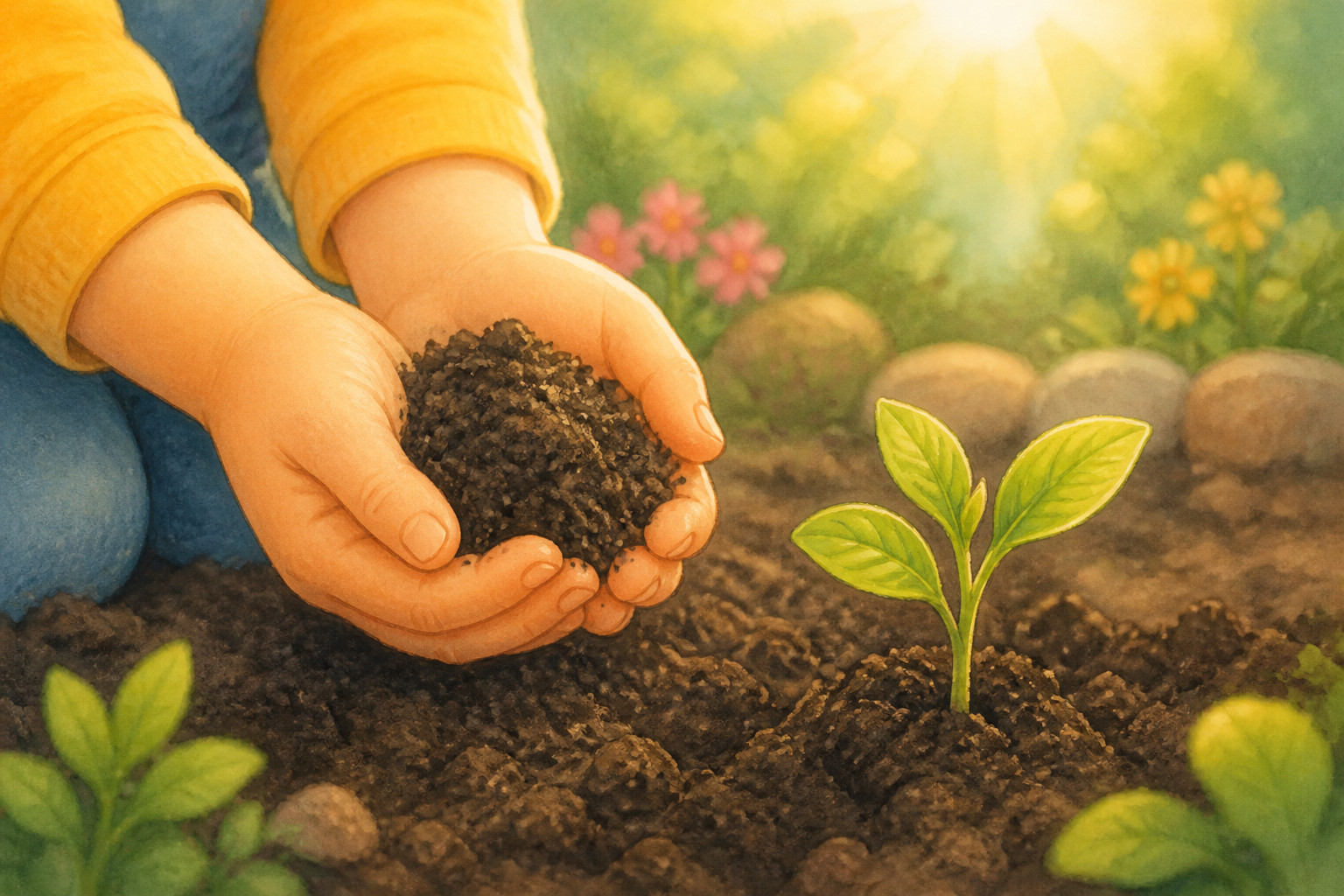
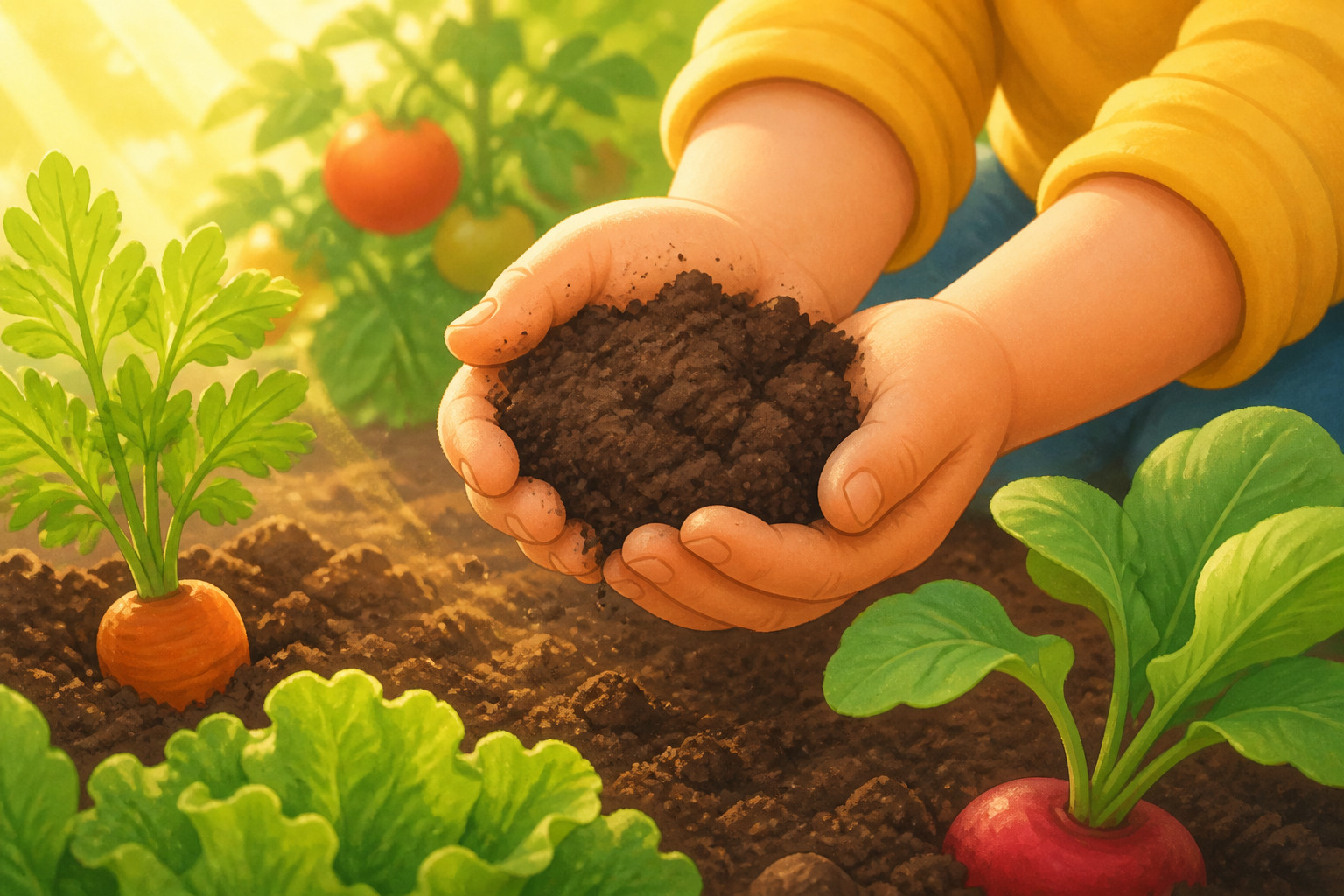
Think of a time you pushed your fingers into a garden bed. The soil felt cool and crumbly, and it smelled a little like rain. Some of it stuck to your hands, and some trickled back down.
That soft, dark stuff looks like just one thing. So what is a handful of soil really made of? Let's look closer, one piece at a time.
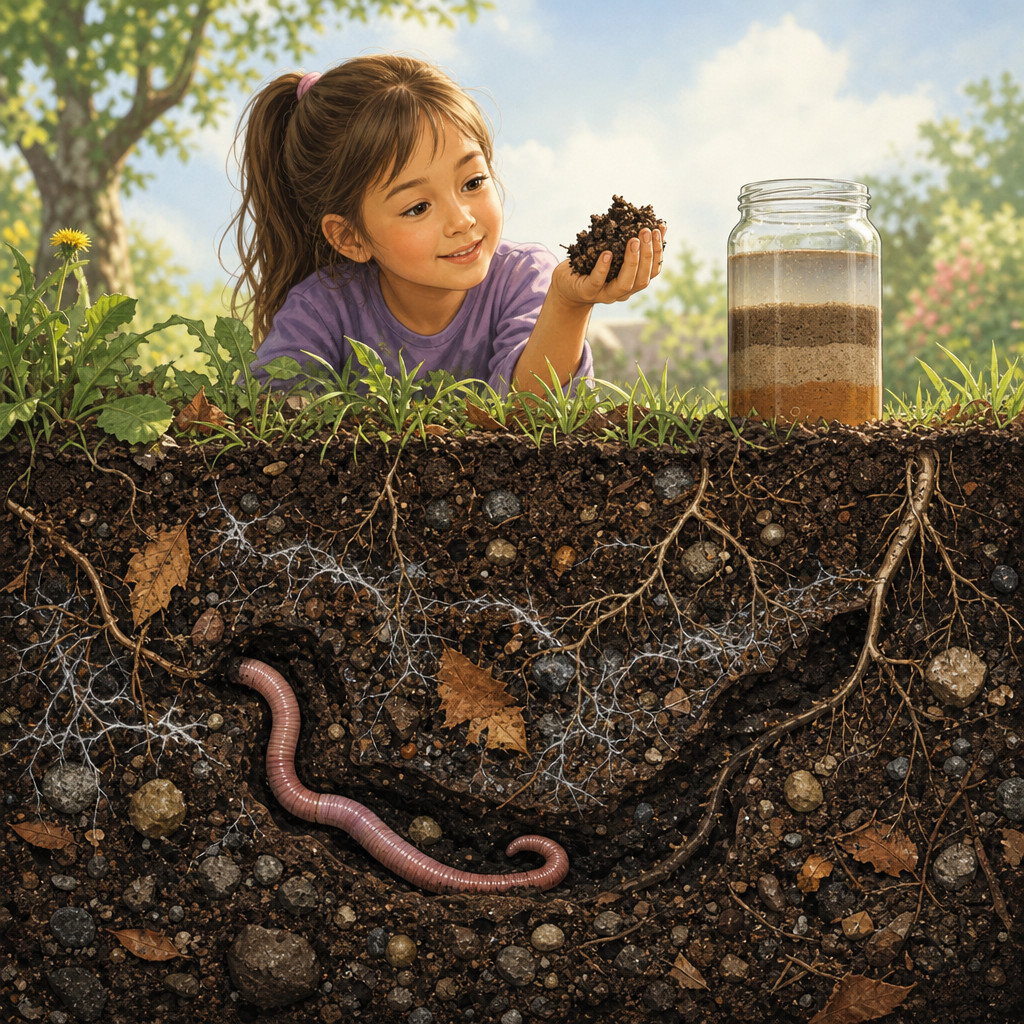
The biggest part of your handful is rock, broken into very small bits. These rock bits make soil heavy and firm. That firmness gives plant roots something strong to grip, so plants can stand up tall.
Some rock bits are grains of sand, gritty when you rub them between your fingers. Others are much smaller and make clay, the smooth and sticky part. Clay helps the crumbs cling together, so the soil holds its shape.
Mixed in with the rock bits are soft, dark crumbs called humus, which means the dark stuff left when old leaves and plants rot away. Humus gives soil its deep brown color. It also feeds growing plants with the goodness they need.
Soil is also home to living things. Earthworms, beetles and creatures too small to see munch on old leaves and turn them into more humus.
As earthworms wiggle along, they leave little tunnels behind. Tiny gaps also sit between all the rock bits and crumbs, even where no worm has been. What do you think fills those tunnels and gaps?
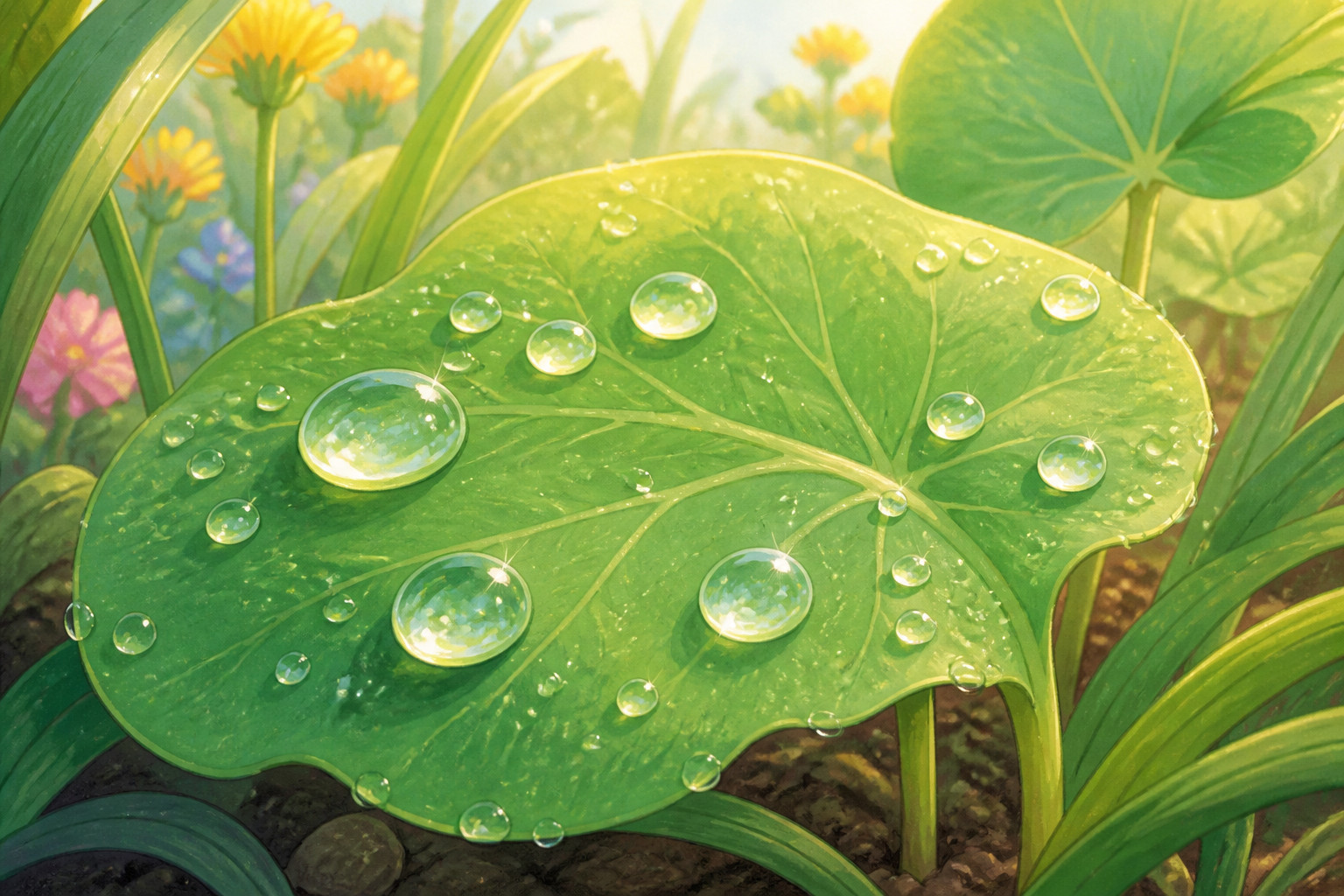
Water and air fill them. After rain, water slips into the smallest gaps between the crumbs. Humus soaks it up like a sponge, so roots can take a drink later.
Air fills the bigger gaps. Roots and earthworms need that air to breathe, just like you do. When soil has plenty of air, roots can grow long and strong.
Humus. A handful of soil is a mix of small rock bits, humus, water, air, and living things like earthworms.
Now you know that every handful of soil holds a whole busy world.