Is a shooting star really a star?
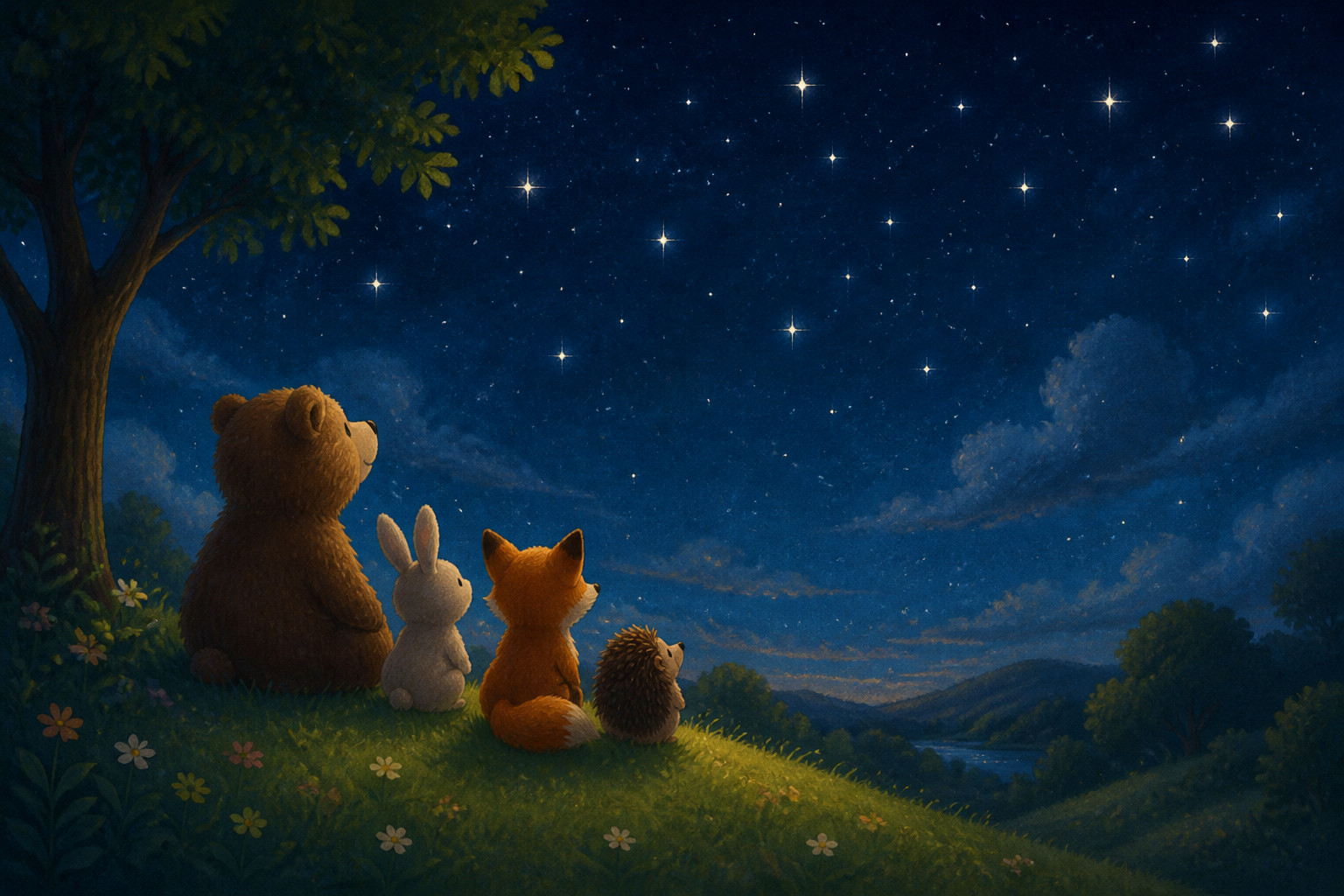
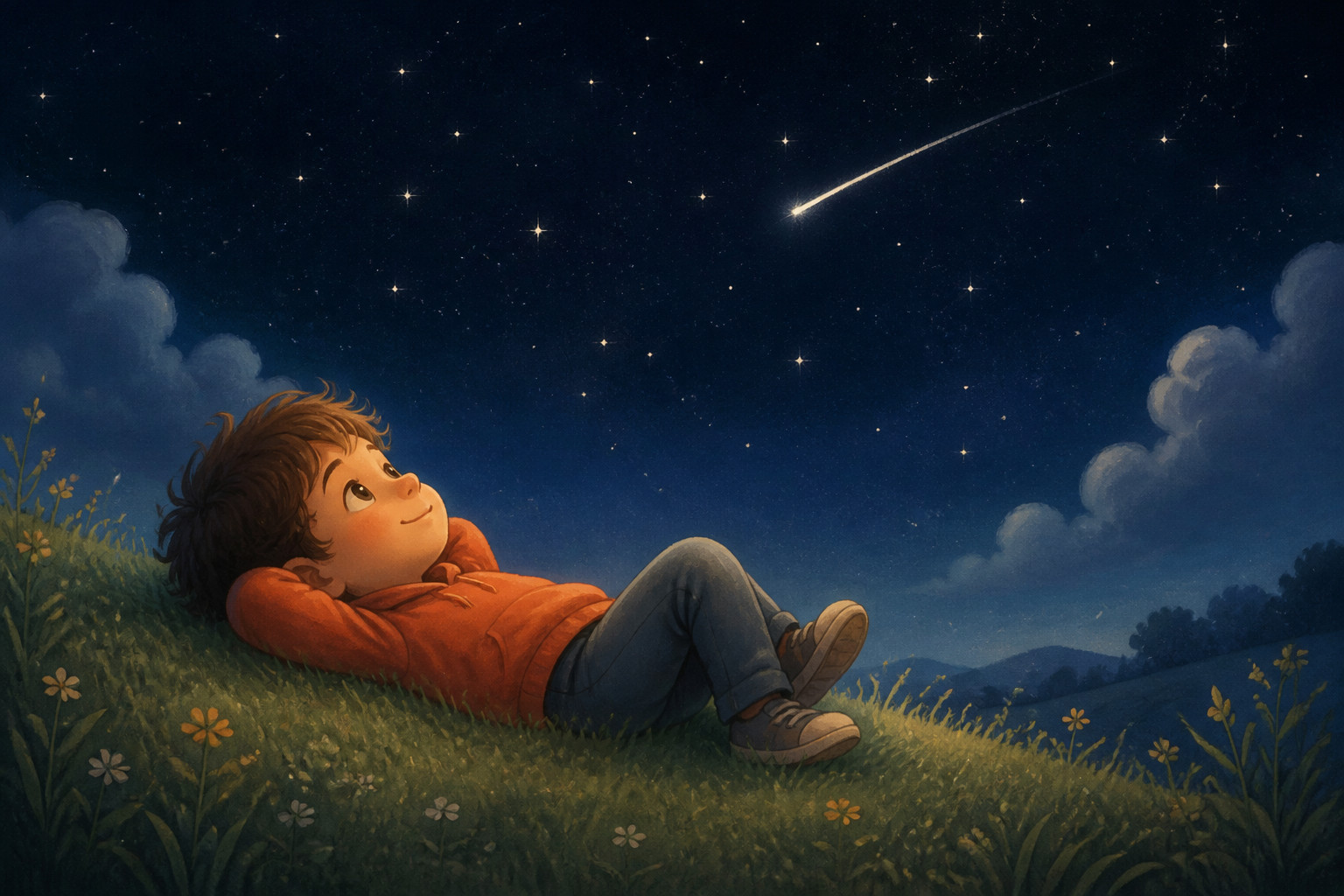
Picture a clear, dark night, with cool grass under your feet. Up above, the stars twinkle and stay still. Then, zip! A quick line of light races across the sky and is gone.
People call that bright zip a shooting star. It sounds like a star that falls down. But is a shooting star really a star? Let's find out together.
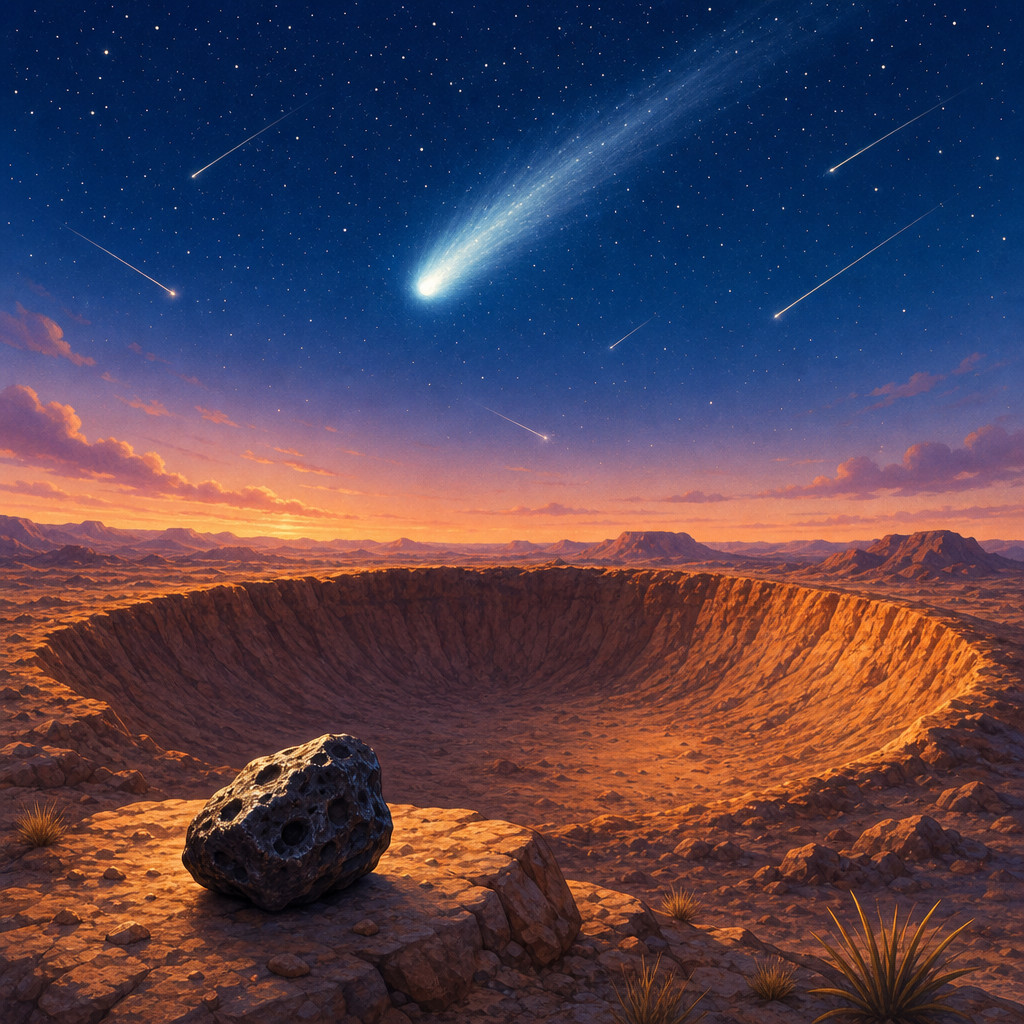
Far out in space, tiny bits of rock drift along. We call them space dust, which means tiny crumbs of rock floating in space. Many bits of space dust are as small as a grain of sand.
Our Earth wears a soft blanket of air all around it. As Earth travels through space, a speck of space dust falls into that blanket of air.
The speck of space dust zooms in fast, much faster than any rocket. It pushes hard against the air in front of it. That squished air gets hot, hot, hot. What do you think happens to the tiny speck now?
The speck heats up until it glows bright, like a tiny spark. Now it shines in the dark sky, high above the clouds.
As it zooms along, the glowing speck leaves a streak, which means a long, thin line of light. That streak is the shooting star you see. It flashes for just a blink.
The tiny speck burns all the way up before it can reach the ground. Then the streak fades, and the sky is dark again.
A real star is something else. A real star is a giant, blazing ball, just like our sun. Real stars are so far away that they look like tiny twinkling dots.
Space dust. Streak. A shooting star is space dust glowing hot in our air, not a real star.
Now you know the secret of the streak, so sleep tight.