Is a shape on Mars that looks like a fossil really a fossil?
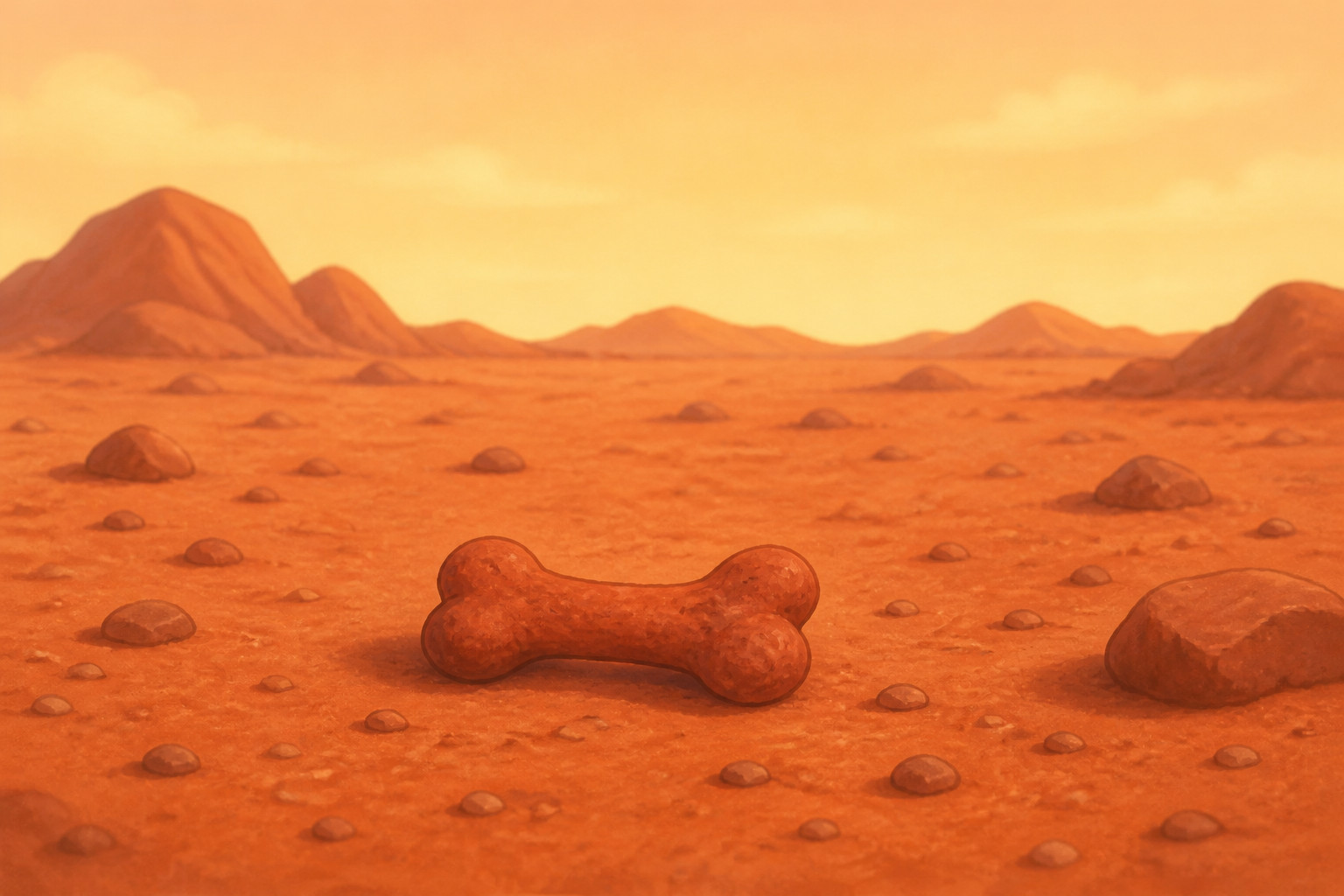
Have you ever looked up at a cloud and spotted a bunny or a dragon? Your eyes love to find shapes they already know. People do the same thing with photos from Mars. In one photo, a small rock on Mars looks just like an old bone.
So is a fossil-looking shape on Mars really a fossil? Let's find out together, one rock at a time.
First, how do people see rocks on Mars at all? Scientists send a rover, which means a robot car that scientists drive from far away on Earth. The rover rolls over the red dust and takes close-up photos of rocks, so scientists can study them.
A real fossil is the shape of something that was once alive, like a shell or a bone, that stone has kept for a very long time. So a real fossil on Mars would show that living things once lived there.
Scientists zoom in on the rover's photos of the bone-shaped rock. They look for the tiny holes, rings and patterns that a real bone leaves behind. They find none of them, only plain rock, just like the stones all around it.
That bone shape must come from something else. Mars is a dry, dusty planet, and strong winds blow across it day after day. What do you think those winds carry along that could scrape a rock into a new shape?
The winds carry tiny grains of sand! The sand rubs against the rock again and again, like sandpaper on wood. This is erosion, which means wind and sand slowly wearing rock away.
Erosion scrapes away the soft parts of a rock faster than the hard parts. The hard parts stay behind as bumps, sticks and curves. After a very long time, a rock can end up shaped like a bone, a shell or even a tiny flower.
So the bone-shaped rock is not a fossil at all. It is plain rock that erosion carved, and nobody has found a real fossil on Mars yet.
Rover, erosion. Wind and sand carve Mars rocks into bone shapes through erosion, and the rover's close-up photos show scientists that the shape is plain rock, not a real fossil.
Next time you spot a shape in a cloud or a stone, you can smile and wonder what made it, little rock detective.