How can ten ones become one ten?
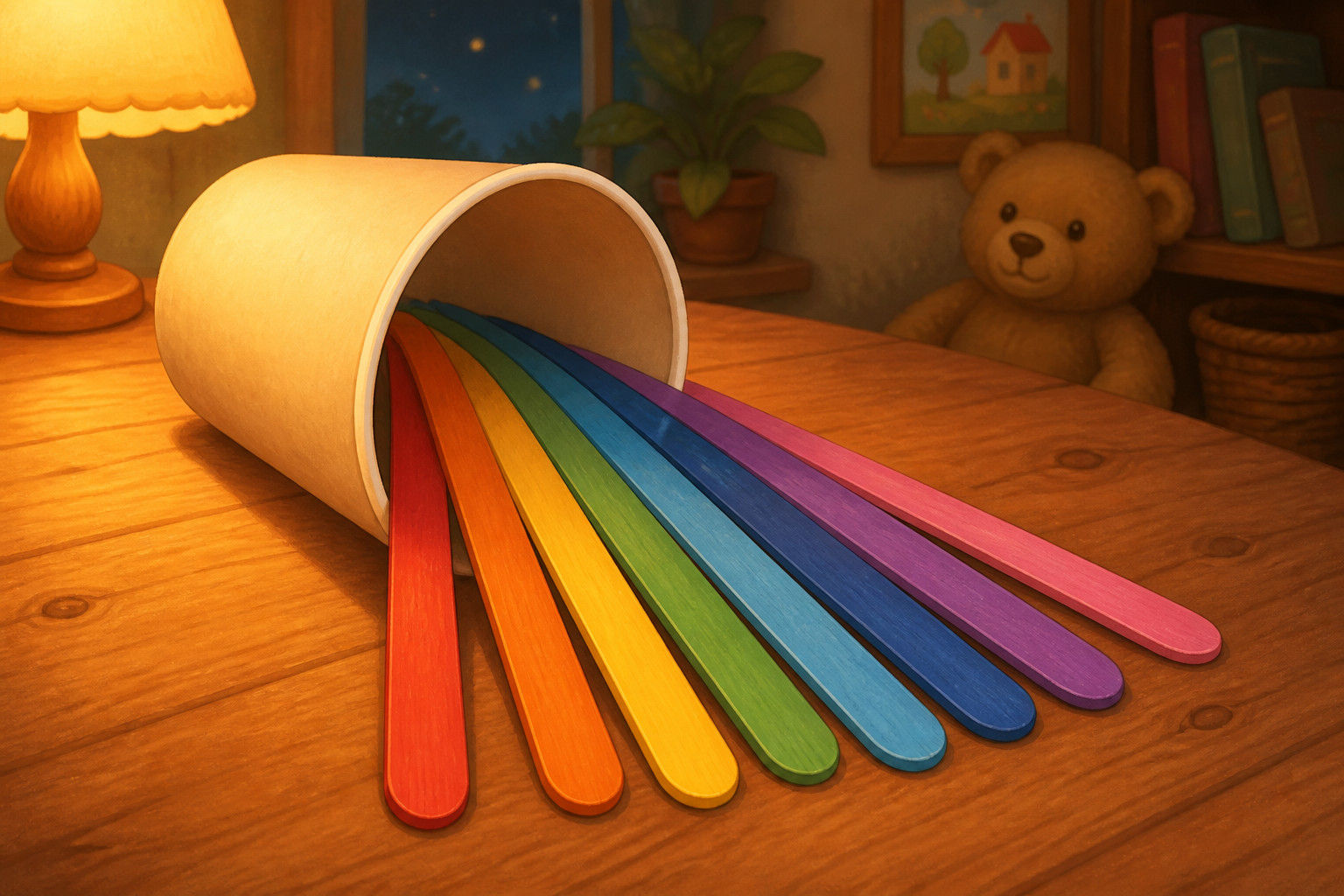
Have you ever tipped a cup of wooden craft sticks onto the table? They clatter and roll everywhere. Let's count them, one stick at a time, until we reach ten.
Now ten sticks lie in a messy row. Grown-ups say that ten ones can become one ten. How can ten ones become one ten?
Each stick on its own is a one, because you count it once. To count ten loose sticks, you touch each one and count ten times. That takes a while, and a stick can roll away.
So you gather all ten sticks into your hand and slip a rubber band around them. You are doing regrouping, which means trading ten loose ones for one group of ten. The band holds the sticks together so you can count them all at once.
Look closely at the bundle. Not one stick is gone, so ten sticks still sit inside. Thanks to regrouping, you count the whole bundle once and call it one ten.
You write ten with two number marks side by side, a one and then a zero. Each mark has its own job to do. What do you think that first one is counting?
That one counts your bundle, so it means one ten. The zero tells you that no loose sticks are left over. Regrouping shows up right there on the paper.
Our key word today was regrouping. When you gather ten loose ones into one bundle, regrouping lets you count that bundle as one ten, with all ten ones still inside.
Sleep well, and maybe tomorrow you can wrap up a bundle of ten all your own.