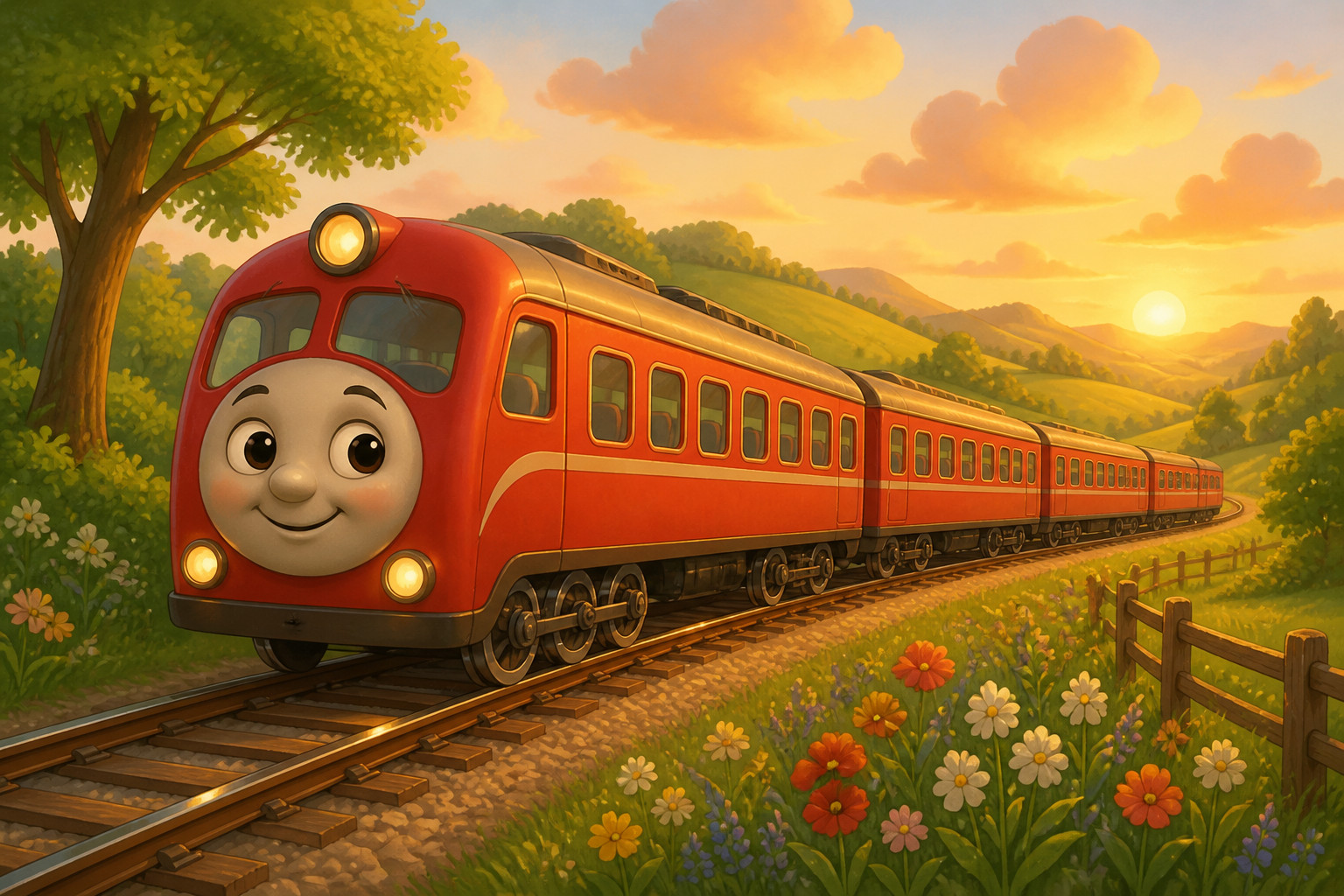
Why does a train need rails?
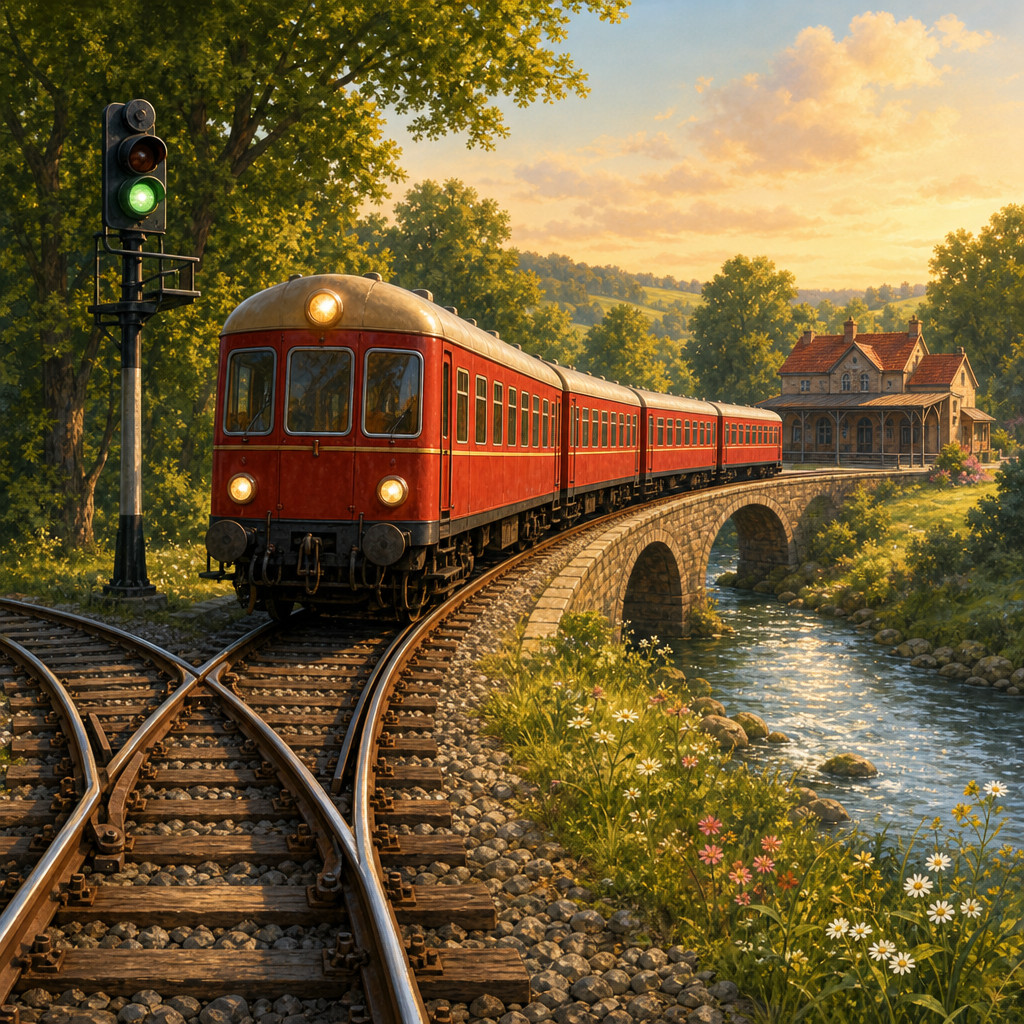
Have you ever heard a train rumble past? Clickety-clack, clickety-clack go its wheels. Its long cars roll along two shiny metal lines on the ground.
Those shiny lines are called rails. A car driver can steer down any road. But a train always stays on its rails. So why does a train need rails?
A car driver turns a steering wheel to go around a corner. A train driver has no steering wheel at all. There is nothing up front to turn the train around a corner. The driver can only make the train go, slow down or stop.
So something else must steer the train. Each train wheel sits on top of a steel rail. The rail is a narrow bar, about as wide as your hand. What do you think stops the wheel from sliding off?
Every train wheel has a flange, which means a little lip around its edge. The flange hangs down right next to the rail, like a tiny wall.
On a straight track, each flange runs close beside its rail. When a wheel starts to slide sideways, its flange bumps the rail. That bump keeps the wheel from slipping off. So the wheels stay right on top, where they belong.
Now the track bends around a hill. The rail pushes on the flanges, and the wheels follow the bend. All the wheels on all the cars do this, one after another. That push from the rails steers the whole long train.
Flange. That is our key word. A train driver cannot steer, so rails push the flanges and steer the train.
Next time a train rumbles by, you can picture its flanges hugging the rails. Sweet dreams, little traveller, wherever your own tracks may lead.