How is a battery different from the plug in the wall?
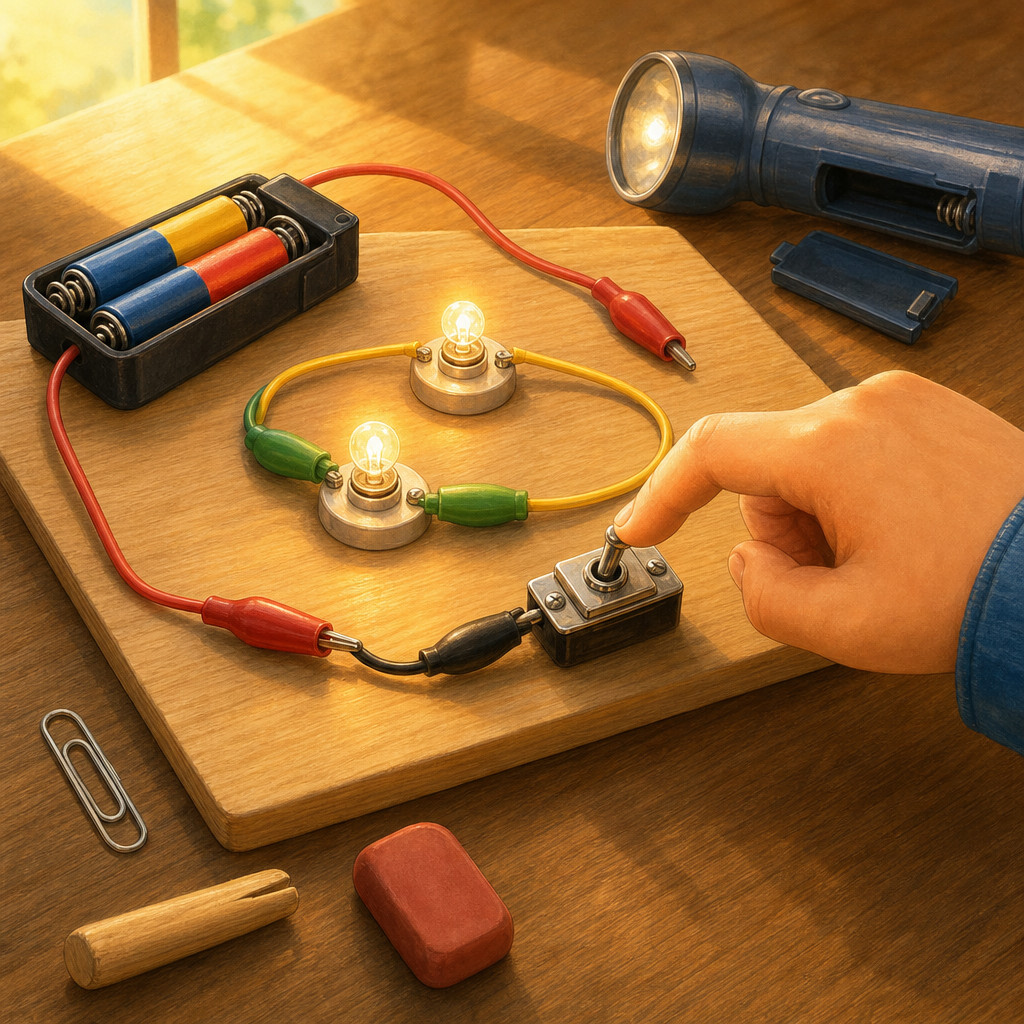
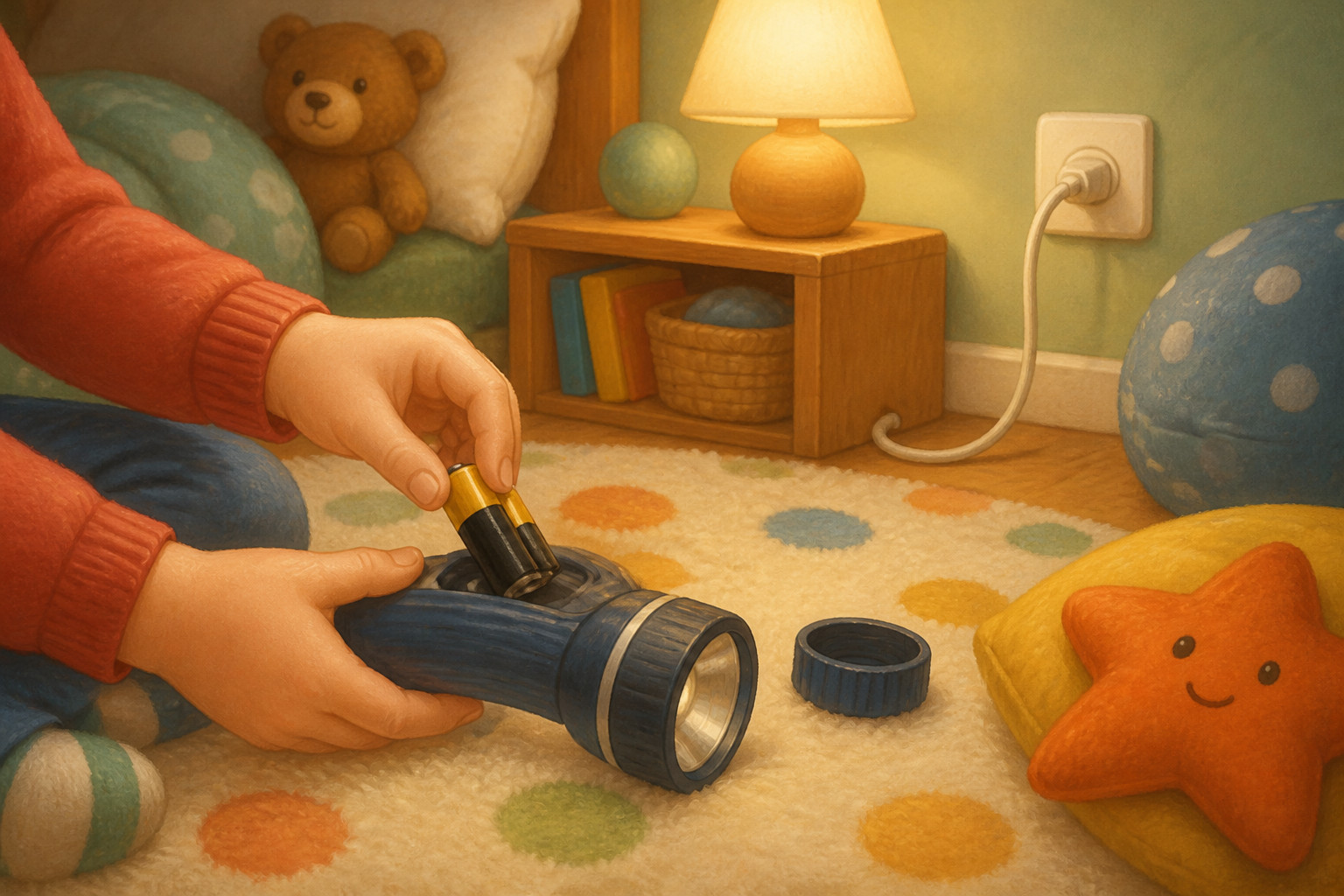
Click! You slide two batteries into a flashlight, and its little light shines. Feel how smooth and cool a battery is in your hand. Across the room, a lamp glows too, but its cord runs to a plug in the wall.
Both of them make a light shine. Yet one fits in your pocket, and the other stays tied to the wall. So how is a battery different from the plug in the wall?
Let's peek inside a battery first. It is packed with chemicals, which means special stuff that can make electricity. A battery carries its own supply, right there inside its metal shell.
When you switch the flashlight on, the two ends of the battery join up through the flashlight's wires. Now the chemicals slowly change, and that change pushes electricity out to the bulb. That push is what makes the light shine.
Bit by bit, the chemicals get used up. As they run low, the light turns dim, and soon you need a fresh battery. A lamp plugged into the wall keeps shining night after night, though. Where do you think its electricity comes from?
Behind the plug, wires hide inside the wall. They join bigger wires along the street, all the way to a power station, which means a big building that makes electricity for a whole town. That faraway building is where the lamp's electricity starts.
At the power station, workers keep giant machines spinning, day and night. The spinning makes electricity, and it rushes along the wires to every home.
Because the power station keeps making electricity all day and all night, the plug in the wall does not run out the way a battery does. A grown-up pushes the plug into the socket, and the lamp gets a steady flow for as long as it stays plugged in.
Because a battery carries its chemicals inside it, a battery can travel. Your flashlight can go camping, far from any wall. The lamp has to stay near its socket, held by its cord.
Chemicals, power station. A battery makes its own electricity from the chemicals inside it until they run out, but the plug gets electricity through wires from a power station that keeps making more.
Sleep well, curious one, and let your questions keep glowing bright.