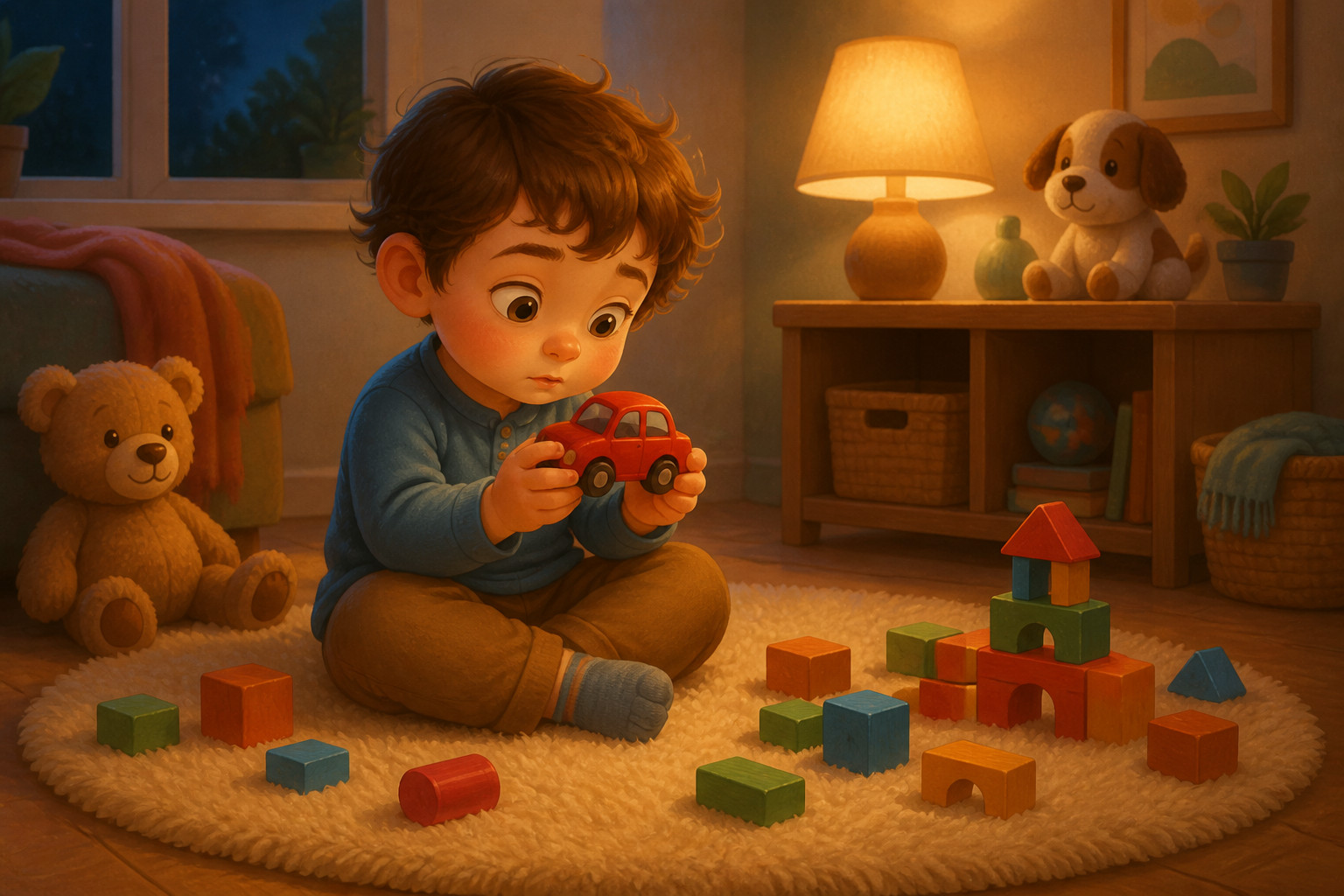
How does describing a broken toy help fix it?
Think of a toy that once stopped working. You pressed its switch, felt a soft click under your thumb, and nothing moved. So you carried it to a grown-up to fix.
Your grown-up asked you what was wrong with it. You told them what you noticed. But how can your words help fix a broken toy?
A grown-up who picks up a broken toy cannot see inside it. They also did not see what happened when it stopped. Your words tell them where to look first.
Let's try it with a toy car that will not drive. It could have empty batteries, a broken switch, a cracked wheel, or a long hair wound tight around the rod the wheels spin on. Your grown-up cannot tell which one just by looking.
So you describe the symptoms, which means the signs you can see or hear that something is wrong. Your first symptom is this: when you flick the switch, the car hums. A hum means the motor inside is getting power.
That hum tells your grown-up that the batteries and the switch are working. Two choices are left now, a cracked wheel or a tangled hair. One more symptom will help.
Next you look closely at the wheels. They look whole, with no cracks at all, yet they will not turn when you push them with a finger. Which problem is left?
Only the tangled hair is left. When you and your grown-up use symptoms to work out the problem, you diagnose it, which means finding what is wrong from the signs.
Because you diagnosed the problem together, your grown-up does not need to open the whole car or buy new batteries. Your grown-up snips the hair away with small scissors while you hold the car still. Then they pull the last bits off the rod.
You flick the switch, and whirr, the wheels spin and the car zooms across the floor. Your describing saved everyone from guessing, and the fix took only a minute.
Two words helped us today: symptoms, diagnose. When you describe the symptoms of a broken toy, your grown-up can diagnose the problem and know exactly which part to fix.
Next time a toy goes quiet, you will know what to say, so sleep well, little fixer.