How does a TV remote send a message without a wire?
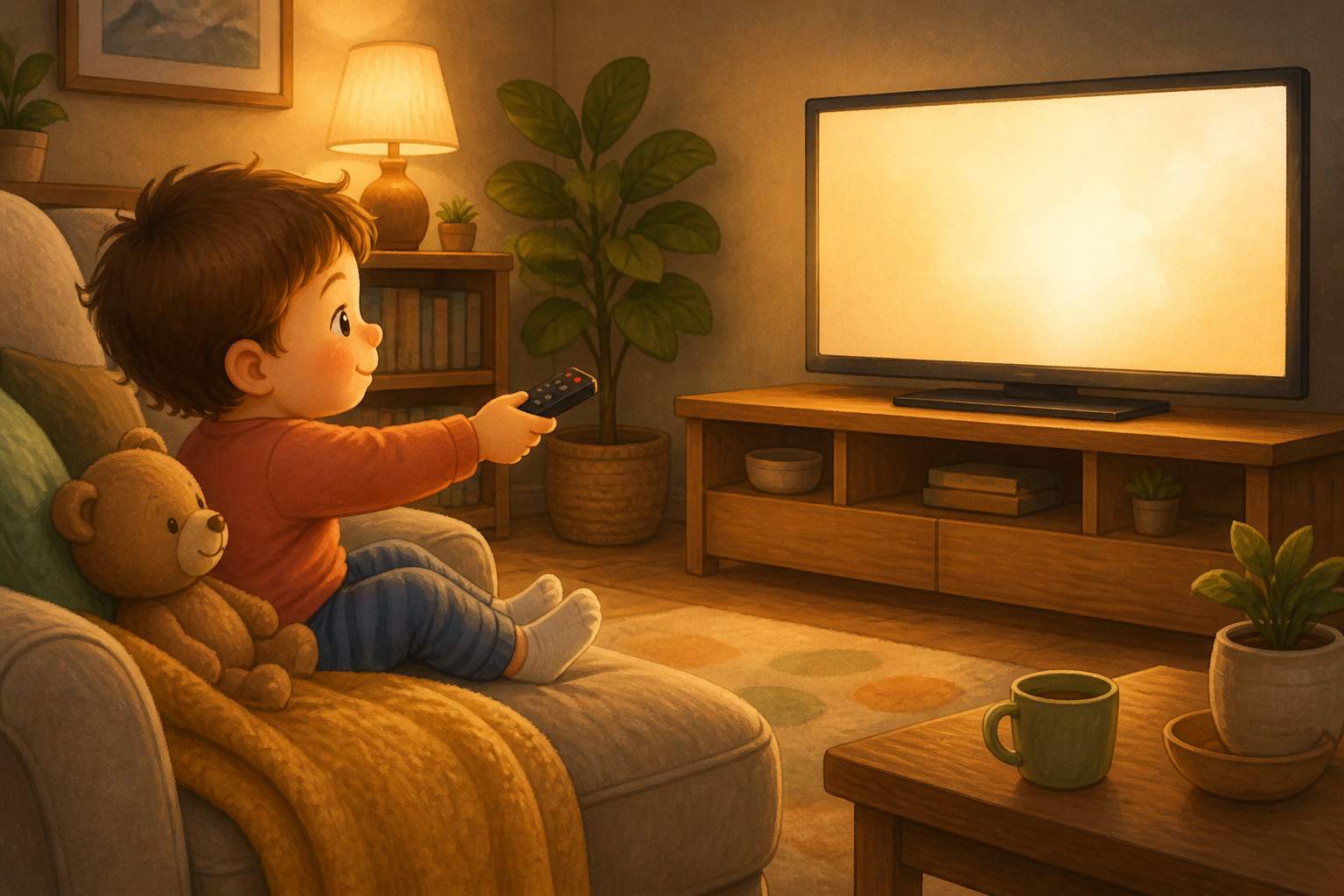
Think of the remote in your hand. It feels smooth, with soft buttons that go click. You press one, and the TV across the room wakes up.
But no wire joins the remote to the TV. Nothing touches them both. So how does the remote send a message without a wire?
When you press a button, you start the message. A small light sits at the front of the remote, at the end you point at the TV. It sits there so its light can shine right toward the TV.
Now that small light blinks on and off, very, very fast. Blink, blink, blink! Do you think your eyes can see those blinks?
Your eyes can't see them at all! The remote makes a kind of light that people's eyes can't see. The TV can see it, and that's all the remote needs.
Each button makes its own pattern of blinks. The blinks make a signal, which means a message made of light. The loud button sends one signal, and the channel button sends a different one.
The signal zooms out of the remote and across the room through the air. Light needs no wire to travel. That's why the remote doesn't need a wire either.
A little dark window sits on the front of the TV. Behind it, a light catcher watches for blinks, so the TV can get your message. It catches the signal the moment it arrives.
The TV reads the signal, blink by blink. It knows every pattern, so it knows which button you pressed. Then it does just what you asked, like making the sound louder.
Here is our new word: signal. You press a button, and hidden light carries the signal through the air to the TV.
Next time you press the remote, picture its quiet blinks zooming across the room to say hello to your TV.