How does a traffic light help cars take turns?
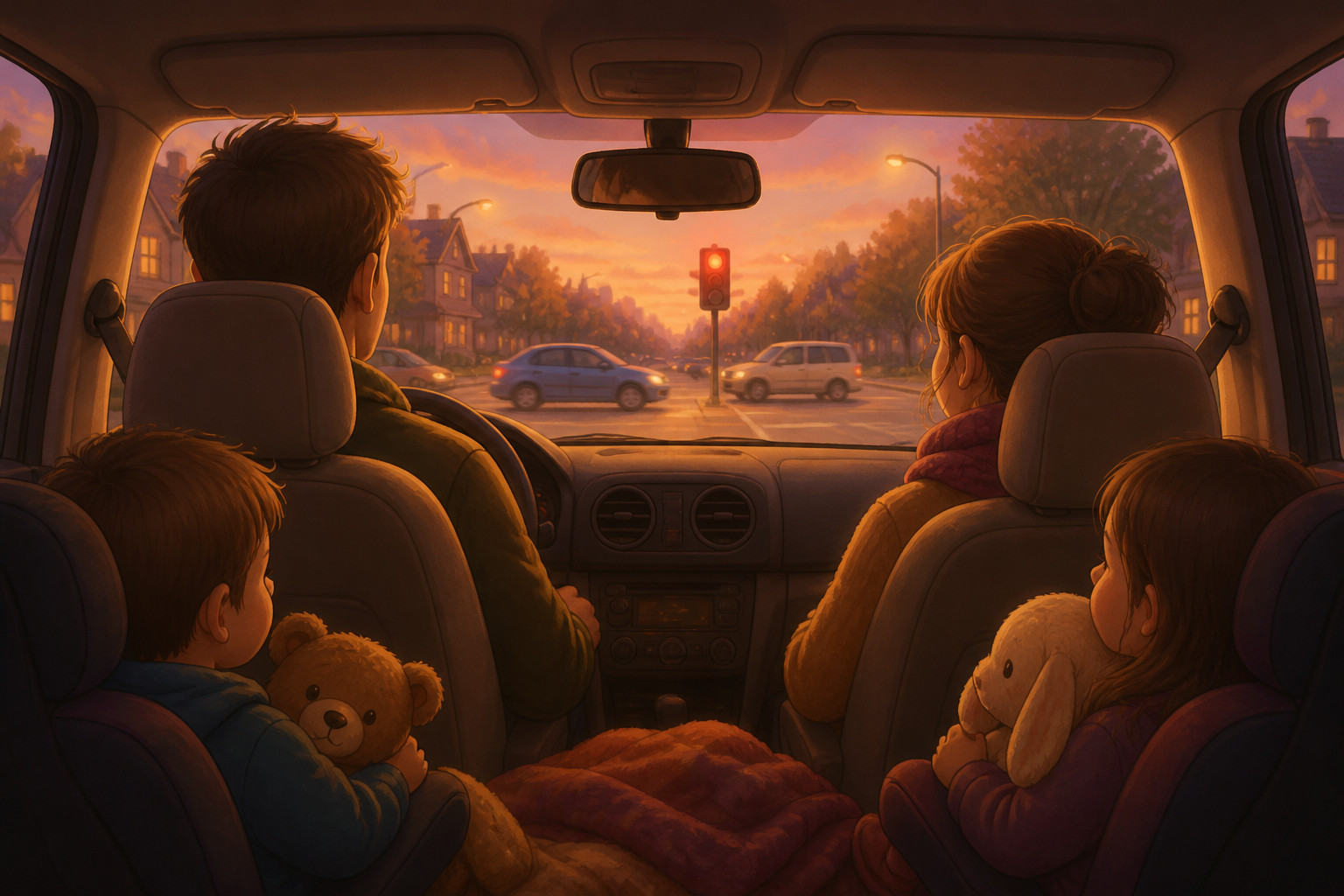
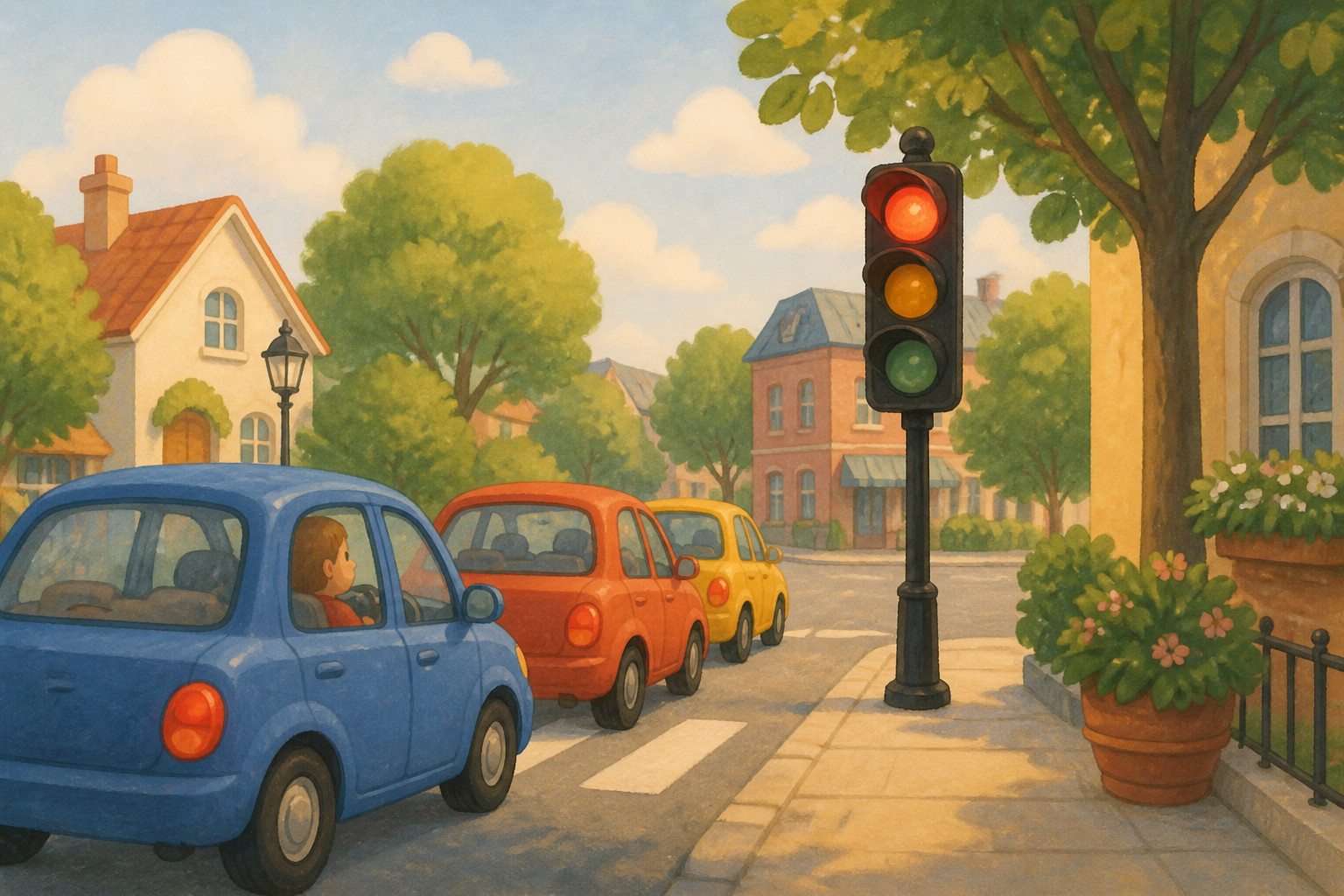
Picture the bright lights above a line of waiting cars. Red, yellow, and green! How does a traffic light help cars take turns?
Let's follow two roads that meet beside a shop. Drivers on both roads want to cross that same spot. They need different turns so their cars have room.
Each road has a traffic light facing its drivers. Each coloured light gives a signal, a sign telling someone what to do. Drivers watch their own signal to know when to move.
The drivers beside the shop see a red signal. Red tells them to stop before the roads meet. They wait there, leaving the crossing clear for other cars.
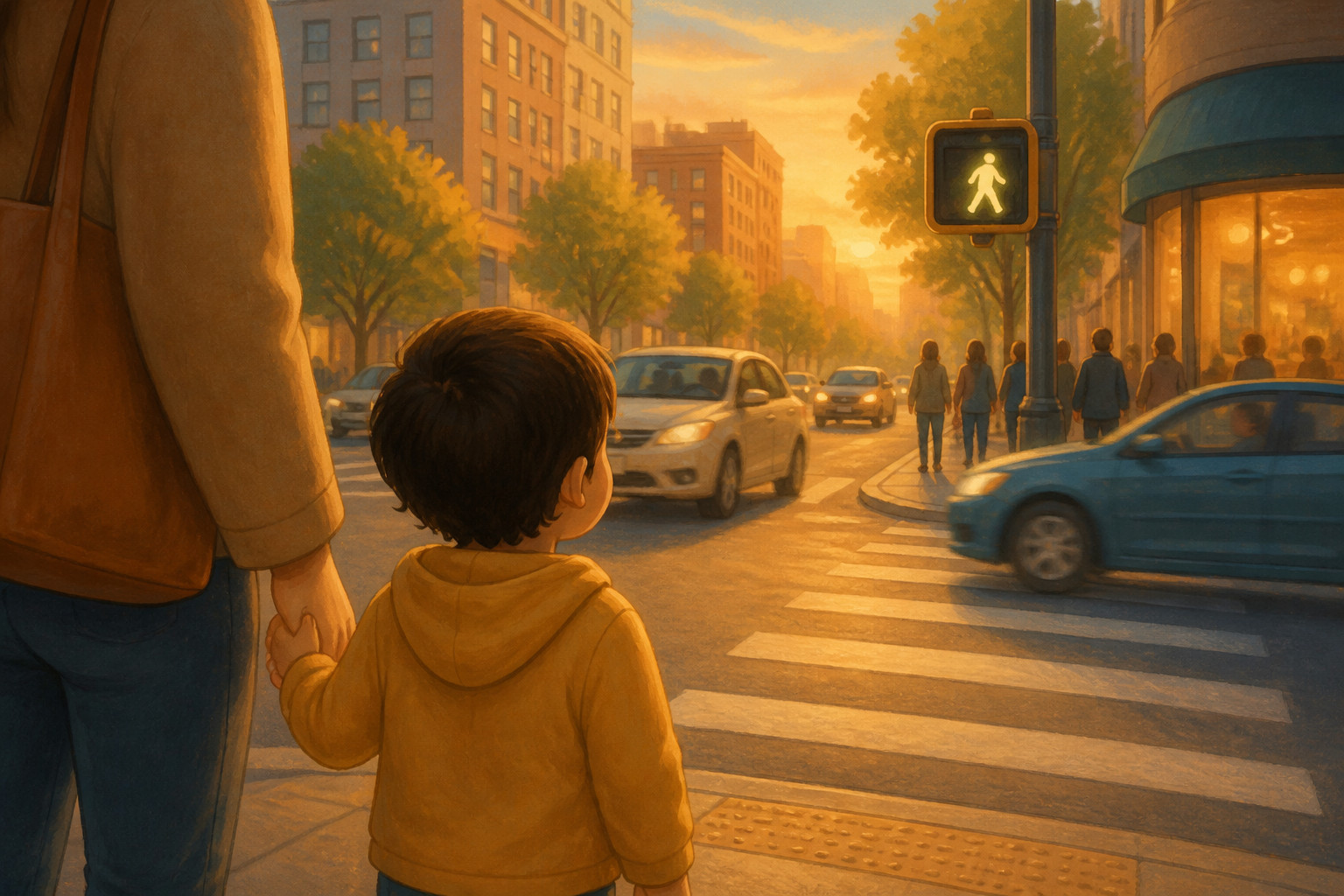
Drivers on the other road see a green signal. Green tells them they can go when the crossing is clear. Those drivers check, then drive across while the shop-side drivers wait.
The lights work together to share the turns. The moving drivers need a signal that their turn is ending. Which colour do you think comes after their green light?
Their light changes to yellow. Yellow tells those drivers their turn is ending. They slow down and stop before the crossing.
Then that yellow light changes to red. Now both lines of waiting drivers see red. This short pause gives cars already crossing time to finish.
Now the light beside the shop changes to green. Those drivers check the clear crossing and drive through. The other drivers wait at red, giving them their turn.
Signal. Traffic lights give drivers signals, making one road wait while the other road goes.
Now you know how those bright lights help drivers share the road, one turn at a time.