How does a switch turn on a light?
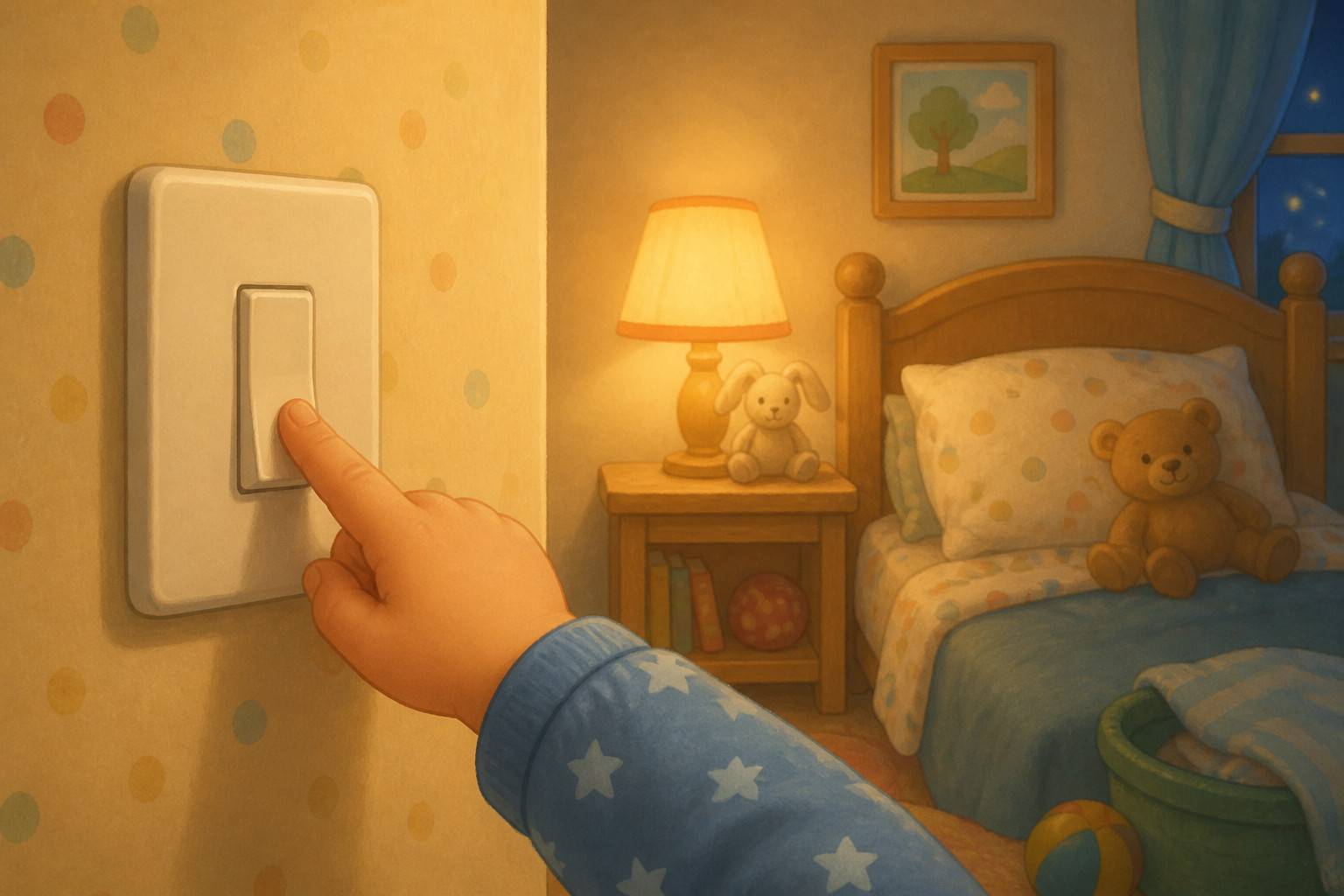
Click! You flip the switch on the wall, and the room fills with light. Maybe you have felt the switch snap down under your finger.
Your finger only touches the switch down by the door. The light hangs far away, up on the ceiling. So how does a switch turn on a light?
Inside the wall, long wires run like thin strings wrapped in plastic. One wire goes from the switch all the way up to the light.
Another wire brings electricity to the switch. Electricity is a kind of power that travels through wires. The light needs electricity to shine.
But the electricity cannot reach the light yet. Inside the switch sit two pieces of metal. When the light is off, those pieces stay apart, with a small gap between them. Electricity cannot jump across that gap, so it stops and waits.
Now you press the switch. Your push moves one metal piece over until it touches the other. The gap closes, and the metal makes one long path. What do you think the electricity will do now?
Off it goes! The electricity flows across the two touching pieces and along the wire. It races up to the light faster than you can blink.
Inside the bulb, the electricity reaches a tiny part made to shine. As the electricity flows through it, that tiny part glows bright. And just like that, light spreads across your room.
One word helps us remember: electricity. Your push closes the gap, so electricity flows to the light and it glows.
Next time you hear that click, you can smile, because you know just how the light wakes up.